
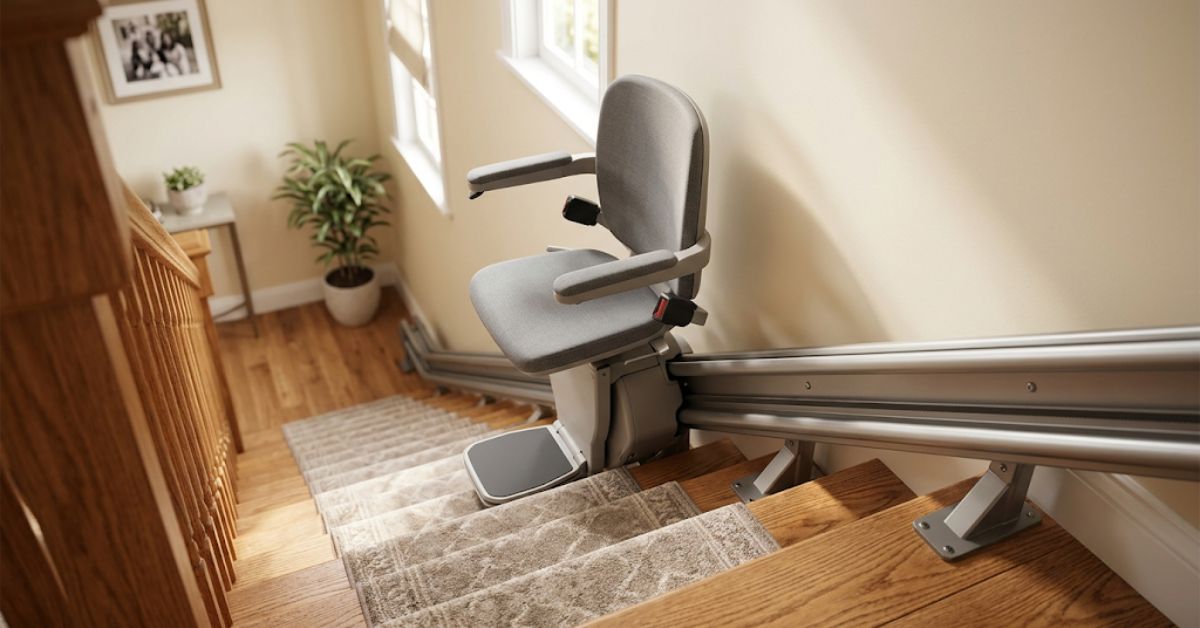
Not every stair lift is designed for every user. Weight capacity varies substantially across residential models — from standard units rated for 250–300 lbs to heavy-duty (also called bariatric) units rated for 400, 500, or up to 600 lbs. For families where the intended user is above the standard capacity range, this is one of the most important specification questions to answer before installation. Buying a stair lift rated below the user's weight is not just a warranty problem — it is a genuine safety issue.
This guide explains standard versus heavy-duty stair lift weight capacities, the practical differences between the two categories, why weight ratings matter more than most families realise, and what to look for when the intended user is at or near the standard capacity limit. It is written for NJ families evaluating options for a larger-body user — and for anyone who wants to understand why weight capacity matters even for users well within standard range.
The Direct Answer
Standard residential stair lifts are typically rated for 250–350 lbs (most commonly 300 lbs).
Heavy-duty or bariatric stair lifts are typically rated for 400–500 lbs, with some models available at 600 lbs.
The right choice depends on the user's weight plus a 20% safety margin, the staircase's structural capacity, and whether the user carries additional weight (medical equipment, oxygen tanks, groceries).
Standard Stair Lift Weight Capacities Explained
The majority of residential stair lifts sold in the US and NJ are rated for 250–350 lbs, with 300 lbs being the most common specification. Standard stair lifts are designed for typical user profiles: adults ranging from lightweight elderly individuals to average-weight adults, with room for personal items and comfort.
300 lb Standard Capacity
The industry-standard weight rating for residential stair lifts. Suitable for the majority of users. Typically comes with a seat width of approximately 18–20 inches, standard footrest, and standard-strength motor. Most stair lifts installed in NJ homes are 300 lb rated.
250 lb Standard Capacity
Some entry-level or budget models are rated at 250 lbs. These are typically less expensive but limit the user population significantly. Common in some outdoor stair lifts and older stair lift models.
350 lb Standard Capacity
Some premium standard stair lifts are rated at 350 lbs, providing extra margin without moving to full heavy-duty specification. Often positioned as an upgrade from 300 lb models with wider seats and enhanced comfort features.
Heavy-Duty (Bariatric) Stair Lift Options
Heavy-duty stair lifts — also called bariatric stair lifts — are engineered specifically for larger-body users. They feature reinforced rails, more powerful motors, wider seats, sturdier armrests and footrests, and stronger safety mechanisms than standard models.
400 lb Heavy-Duty Capacity
The most common heavy-duty capacity, offered by most major stair lift manufacturers as an upgrade from their standard models. Seats are typically 22–24 inches wide (versus 18–20 inches on standard models). Motors and rail systems are reinforced. Installation is essentially the same as standard.
500 lb Heavy-Duty Capacity
A step up from 400 lb models with substantially larger seat dimensions (typically 24–26 inches wide), reinforced everything, and often features like power swivel seats and expanded safety systems. Available from a smaller number of manufacturers.
600 lb Heavy-Duty Capacity
The maximum weight capacity typically available for residential stair lifts. Available from select manufacturers with reinforced rails, industrial-grade motors, wide oversized seats, and staircase structural evaluation typically required. Higher cost and longer lead times than lower-capacity options.
Standard vs Heavy-Duty Side by Side
🪑 Standard Stair Lift
- Weight capacity: 250–350 lbs (typically 300)
- Seat width: 18–20 inches
- Motor: Standard residential grade
- Cost range: $2,500 – $5,000 (straight)
- Installation time: 1–5 days
- Availability: All major manufacturers
- Warranty: Standard 2–5 years typical
💪 Heavy-Duty Stair Lift
- Weight capacity: 400–600 lbs
- Seat width: 22–26 inches
- Motor: Reinforced industrial grade
- Cost range: $4,000 – $8,500+ (straight)
- Installation time: 1–7 days
- Availability: Select manufacturers only
- Warranty: Similar 2–5 years typical
Why Weight Rating Matters More Than You Think
Weight capacity is not just a manufacturer's specification — it directly affects safety, longevity, warranty coverage, and insurance liability. Understanding why the rating matters helps families make the right choice rather than defaulting to the cheapest option.
Safety Margin, Not Absolute Maximum
The rated weight capacity is the maximum weight the equipment is engineered to handle safely under ideal conditions. Real-world use requires a safety margin. Industry best practice is:
- The user's actual weight should be at least 20% below the stair lift's rated capacity
- A 300 lb-rated stair lift is best suited for users up to approximately 250 lbs
- A 400 lb-rated heavy-duty stair lift is best suited for users up to approximately 330 lbs
- A 600 lb-rated bariatric stair lift is best suited for users up to approximately 500 lbs
The 20% margin accounts for the user's weight variations, additional items carried (medical equipment, groceries, small pets), transient loads during transfer, and the mechanical stress of daily up-and-down use over years.
Warranty Coverage
Stair lift warranties typically become void if the equipment is used above its rated capacity. If a 300 lb-rated stair lift is regularly used by a 320 lb user, and a component fails, the manufacturer may decline warranty coverage for the repair. This can turn a covered repair into a $500–$2,000 out-of-pocket expense.
Motor Longevity
A stair lift motor operating at or near its maximum rated load consistently will experience accelerated wear compared to one operating at 70–80% of rated capacity. Heavy-duty motors used within their design range will typically outlast standard motors used near their upper limits. Over a 10–15 year equipment life, this makes a meaningful difference in reliability and repair costs.
Insurance and Liability
Home insurance liability coverage typically applies to accessibility equipment used within manufacturer specifications. Injury from equipment used above its rated capacity may fall outside coverage. This is another reason why choosing a rated capacity comfortably above the user's actual weight is worth the additional cost.
The cost difference between a 300 lb standard stair lift and a 400 lb heavy-duty model is typically $1,000–$2,500 — a meaningful premium but small compared to the potential consequences of buying under-rated equipment. When the intended user is within 20% of a standard model's rating, upgrading to heavy-duty is generally the right choice.
Weight Capacity Considerations for the Staircase Itself
The heavier the user and the heavier the stair lift, the more important the staircase's structural integrity becomes. For standard 300 lb-rated installations, virtually any residential staircase in reasonable condition can support the equipment plus user weight without concern. For heavy-duty installations — particularly 500–600 lb rated systems — additional structural considerations apply:
- Tread stress calculation: A 600 lb user plus a stair lift adds substantial dynamic load to individual treads. Older or worn stair treads may need reinforcement
- Stringer inspection: The load-bearing stringers running along the staircase edges bear the ultimate structural load. On older NJ homes — particularly pre-1950s properties in Bergen, Essex, and Hudson County — a stringer inspection is prudent before heavy-duty installation
- Bracket placement: Heavy-duty rails typically require additional bracket points to distribute load. Bracket placement is engineered based on the specific rail specification and installation
- Wall attachment for very heavy applications: Some very heavy-duty installations (500+ lbs) may benefit from additional wall attachment points supplementing the standard tread-mounted brackets
An experienced installer evaluates all of these considerations during the in-home assessment. See our related post: Does a Stairlift Damage Your Stairs?
Choosing the Right Weight Rating for Your Situation
The choice between standard and heavy-duty is not always obvious. Consider these factors together:
| User Weight | Recommended Stair Lift Rating | Typical Model Category |
|---|---|---|
| Under 210 lbs | 250 lb+ rated | Standard model — any option works |
| 210 – 250 lbs | 300 lb+ rated | Standard model — most common choice |
| 250 – 290 lbs | 350 lb+ rated | Standard extended or heavy-duty |
| 290 – 330 lbs | 400 lb rated | Heavy-duty model recommended |
| 330 – 415 lbs | 500 lb rated | Heavy-duty bariatric |
| 415 – 500 lbs | 600 lb rated | Maximum bariatric — specialised installation |
When to consider heavy-duty even if you don't need the full capacity: Heavier-body users often benefit from the wider seats, sturdier armrests, and enhanced comfort features of heavy-duty models even when a standard model would technically meet the weight rating. Comfort during daily use matters — a stair lift that feels cramped or unstable will get used less often, defeating its purpose.
Beyond Weight: Other Considerations for Larger-Body Users
Weight capacity is the headline specification, but several related factors matter for larger-body users:
Seat Width
Standard stair lift seats are 18–20 inches wide. Heavy-duty seats are 22–26 inches. For comfort, the seat should be at least 2 inches wider than the user's hip width. Users considering a stair lift should sit in a demonstration model when possible — comfort is difficult to assess from specifications alone.
Footrest Size and Load
The footrest bears substantial load, particularly during transitions and for users with reduced leg strength. Heavy-duty models have larger, more robust footrests with higher weight ratings. A weak footrest is a functional problem regardless of the seat's rating.
Armrest Strength
Users transferring to and from the stair lift often support significant weight through the armrests during transitions. Heavy-duty armrests are reinforced for this. Standard armrests can be inadequate for heavier users, causing early wear or discomfort.
Speed and Motor Response
Heavy-duty motors are engineered for higher continuous loads. Standard motors used near their upper limits sometimes exhibit slower ascent speeds on inclines with heavier users. Heavy-duty models maintain consistent speed regardless of user weight within their rating.
Availability of Curved Heavy-Duty Options
Heavy-duty stair lifts are widely available in straight configurations. Curved heavy-duty stair lifts exist but are less common and more expensive — often $12,000–$25,000 versus $8,000–$16,000 for curved standard. If your staircase is curved and the user needs heavy-duty capacity, this significantly narrows the manufacturer options and increases cost.
Funding Considerations for Heavy-Duty Models
Heavy-duty stair lift installations are eligible for the same funding programs as standard models, but the higher price point sometimes affects the practical arithmetic:
- VA HISA grants: Up to $6,800 covers most straight heavy-duty installations for eligible veterans, but curved heavy-duty may exceed the grant. See: VA Grants for Stairlifts
- NJ Medicaid MLTSS: Covers heavy-duty models when medically justified. Documentation should specifically address why standard capacity is insufficient. See: NJ Medicaid Plans
- Medicare Advantage: Supplemental benefits ($500–$2,500) will contribute partially but rarely cover a full heavy-duty installation. See: Medicare Advantage Benefits
- Combining funding sources: For users needing heavy-duty capacity, combining VA + MA + private financing often bridges the gap effectively
For the LMN specifically, physicians should document why the weight capacity requirement exists — either the user's weight or condition-related need for the larger seat. See: Letter of Medical Necessity for Home Modifications.
Need a stair lift rated for a larger user? Everhome Mobility works with all major heavy-duty stair lift manufacturers and provides in-home assessments that specifically address weight capacity, staircase structural evaluation, and comfort considerations for larger-body users.
Get a Heavy-Duty Stair Lift Assessment →Frequently Asked Questions
What is the maximum weight capacity of a residential stair lift?
The maximum weight capacity typically available for residential stair lifts is 600 lbs, offered by select manufacturers in specialised bariatric models. More common heavy-duty capacities are 400 lbs and 500 lbs. Standard residential stair lifts are typically rated at 250–350 lbs, with 300 lbs being the most common specification.
How much heavier is a heavy-duty stair lift than a standard one?
Heavy-duty stair lifts cost approximately $1,000–$3,500 more than comparable standard models — typically $4,000–$8,500 for a straight heavy-duty installation versus $2,500–$5,000 for a straight standard installation. Curved heavy-duty installations range from $12,000–$25,000. The upgrade includes reinforced rails, larger motors, wider seats, and stronger safety mechanisms.
Do I need a heavy-duty stair lift if I weigh 275 pounds?
At 275 lbs, a standard 300 lb-rated stair lift is technically within capacity but leaves only about 8% safety margin — below the recommended 20% cushion. Best practice is either a 350 lb standard model or a 400 lb heavy-duty model, providing appropriate safety margin, better warranty protection, and improved comfort. Many families in this weight range choose heavy-duty for the comfort features even when the standard rating would technically suffice.
Can I use a stair lift above its rated weight capacity?
No. Using a stair lift above its rated weight capacity voids the manufacturer warranty, accelerates equipment wear, may compromise safety systems, and creates liability exposure. If the intended user is above the current stair lift's rating, upgrading to a heavy-duty model is essential — the cost difference is small relative to the risk.
Are curved heavy-duty stair lifts available?
Yes, but from fewer manufacturers and at substantially higher cost than curved standard stair lifts. Curved heavy-duty installations typically cost $12,000–$25,000, versus $8,000–$16,000 for curved standard models. Lead time for custom rail fabrication may also be longer. Discuss options with your installer during the initial assessment.
Does a heavy-duty stair lift require additional staircase structural work?
Standard heavy-duty installations (400 lb rated) rarely require additional structural work beyond standard installation practices. Higher-capacity bariatric installations (500–600 lb rated) may warrant a stringer and tread inspection, particularly on older NJ homes. In practice, most NJ residential staircases can accommodate heavy-duty stair lifts without modification. A qualified installer evaluates this during the in-home assessment.