
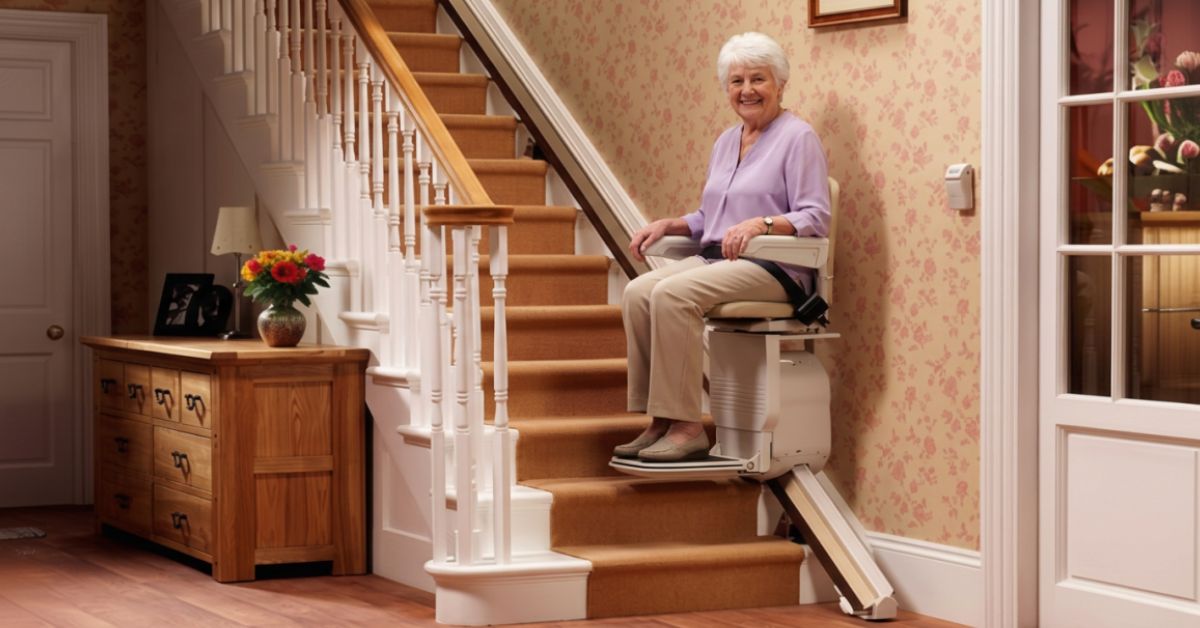
If you or a family member is enrolled in NJ Medicaid, there is a very real possibility that a stair lift, wheelchair ramp, or bathroom modification can be fully funded at no cost to your family. The catch is that Medicaid's home modification coverage in New Jersey does not work like a straightforward insurance benefit — it comes through the Managed Long-Term Services and Supports (MLTSS) program, delivered by one of four managed care organisations (MCOs), each with slightly different processes, and always requiring pre-authorisation before installation.
This guide breaks down exactly which NJ Medicaid plans provide coverage for home accessibility modifications, how the MLTSS program works, what each of the four NJ MCOs (Aetna Better Health, Horizon NJ Health, UnitedHealthcare Community Plan, and Wellpoint) covers, how to apply, and how to avoid the delays that trip up most families. Written specifically for NJ residents navigating this system for the first time.
The Direct Answer: Yes, NJ Medicaid Can Cover Stairlifts
NJ Medicaid — specifically the MLTSS (Managed Long-Term Services and Supports) program — can cover the full cost of stairlifts, wheelchair ramps, grab bar installation, walk-in shower conversions, and other home accessibility modifications for qualifying enrollees. This coverage is not automatic with basic Medicaid enrollment. The person must:
- Be enrolled in NJ FamilyCare (the umbrella name for NJ Medicaid)
- Meet the clinical criteria for MLTSS through a needs assessment
- Have the home modification included in an approved care plan
- Obtain pre-authorisation from their managed care organisation (MCO) before installation begins
When all four conditions are met, the MCO covers the modification with no copay or out-of-pocket cost to the enrollee. This is one of the most generous coverage benefits in the entire NJ home modification funding landscape — but it is also one of the most misunderstood.
How NJ Medicaid Home Modification Coverage Works
NJ Medicaid delivers home and community-based services — including home modifications — through a program called MLTSS. MLTSS combines nursing home coverage, home care, and home modification benefits into a single managed care program administered by four contracted managed care organisations (MCOs). Every MLTSS enrollee is assigned to one MCO, and that MCO manages the enrollee's care plan including any home modifications.
The purpose of MLTSS is to allow eligible individuals to remain safely in their own homes and communities rather than moving to nursing facilities — which is dramatically more expensive for the state. Home modifications that support this goal (a stair lift that allows access to a second-floor bedroom, a ramp that allows the person to leave the home safely, bathroom modifications that reduce fall risk) directly serve MLTSS's purpose and are routinely approved for eligible enrollees.
Clinical Eligibility for MLTSS
To qualify for MLTSS home modification benefits, the enrollee must meet clinical criteria demonstrating they need long-term care services. In practical terms, this typically means:
- Requiring assistance with two or more Activities of Daily Living (ADLs) — bathing, dressing, toileting, transferring, eating, continence
- Being at risk of nursing home placement without home-based support
- Having a medical condition that produces the mobility limitation the modification would address
Clinical eligibility is determined through an assessment conducted by the MCO's care management team. This assessment is not something the family requests directly — it is initiated after Medicaid enrollment and MLTSS referral.
Financial Eligibility for NJ Medicaid
Basic NJ FamilyCare (Medicaid) financial eligibility must also be met. For MLTSS specifically, income and asset limits apply and are updated annually. As a general framework for 2026:
- Individual monthly income limit for MLTSS is approximately $2,901 (300% of the SSI federal benefit rate)
- Asset limit is approximately $2,000 for an individual (with certain exemptions including primary residence, one vehicle, and personal effects)
- Spousal impoverishment protections apply for married couples where one spouse needs MLTSS
These limits change annually and have several exceptions. Always confirm current limits with NJ FamilyCare at 1-800-701-0710 or through the New Jersey Department of Human Services website before assuming eligibility one way or the other.
Common misconception: Many families assume that because they own their home they cannot qualify for NJ Medicaid. This is not correct — the primary residence is generally exempt from Medicaid's asset calculation. Homeowners can and do qualify for MLTSS regularly. Do not assume ineligibility without checking with NJ FamilyCare.
The Four NJ Medicaid MCOs That Cover Home Modifications
NJ Medicaid MLTSS is delivered through four contracted managed care organisations. Every MLTSS enrollee is assigned to one MCO — either through their choice at enrollment or through automatic assignment. The four current NJ MLTSS MCOs are:
Aetna Better Health of New Jersey
One of the four NJ MLTSS contracted MCOs. Covers home modifications including stair lifts, ramps, grab bars, and bathroom modifications for MLTSS-enrolled members with an approved care plan.
Horizon NJ Health
The largest NJ Medicaid MCO by enrollment. Covers MLTSS home modifications including accessibility improvements, mobility equipment installation, and structural modifications supporting community living.
UnitedHealthcare Community Plan of New Jersey
NJ MLTSS coverage through UnitedHealthcare's community plan. Home modifications are covered when included in the enrollee's approved MLTSS care plan.
Wellpoint New Jersey (formerly Amerigroup)
Wellpoint (rebranded from Amerigroup in 2024) is the fourth NJ MLTSS-contracted MCO. Covers home modifications following the standard MLTSS pre-authorisation process.
MCO contracts and rebranding change periodically — Amerigroup became Wellpoint in 2024, and MCO participation is renewed by contract cycle. Always confirm current MCO participation directly through NJ FamilyCare before assuming a specific plan is or is not active. Everhome Mobility monitors these changes and works with all four current NJ MLTSS MCOs.
Does It Matter Which MCO Covers You?
All four NJ MLTSS MCOs are required to provide the same core home modification benefits — this is set by the state contract with each MCO, not left to the MCO's discretion. What varies between MCOs is not whether home modifications are covered, but rather:
- Provider network: Each MCO maintains its own network of contracted home modification providers. If your preferred installer is in-network with one MCO but not another, the process may be simpler with the MCO that has the network relationship
- Care management approach: Each MCO's care management team has its own processes for handling modification requests, pre-authorisation timing, and communication
- Specific plan documents: While the core benefits are the same, each MCO's Member Handbook describes the modification benefit differently and lists slightly different documentation requirements
- Response time: Anecdotally, MCOs vary in how quickly they process modification requests — but all are held to state-mandated timelines
For most enrollees, the MCO they are assigned to is more determined by their existing Medicaid enrollment history than by preference. Changing MCOs specifically to access home modification benefits is generally not necessary — all four cover the same modifications.
What NJ Medicaid MLTSS Covers Under Home Modifications
The MLTSS home modification benefit covers accessibility improvements that support the enrollee's ability to remain in the community rather than moving to institutional care. Standard covered modifications include:
- Stair lifts: Straight, curved, outdoor — installation typically covered in full when included in the care plan
- Wheelchair ramps: Modular aluminum and permanent construction ramps, including handrails and edge protection
- Grab bar installation: Bathroom, hallway, bedroom — professional installation covered
- Bathroom modifications: Walk-in showers, tub cut-outs, comfort-height toilets, non-slip flooring
- Doorway widening: When required for wheelchair access
- Vertical platform lifts: When a wheelchair ramp is not practical for the specific home
- Threshold ramps and small step ramps: For interior transitions
- Handrail upgrades on staircases: When needed for safe stair use
What MLTSS Typically Does Not Cover
- Purely cosmetic or convenience upgrades not related to disability
- General home repair or maintenance
- Modifications in properties the enrollee does not live in (with limited exceptions for family caregivers)
- Equipment maintenance or repair after installation — the benefit is for installation only
- Retroactive coverage — the modification must be pre-authorised before installation begins
How to Get a Home Modification Approved: Step by Step
Confirm current NJ Medicaid enrollment
The person must be actively enrolled in NJ FamilyCare (Medicaid). If enrollment has lapsed or is pending, restore active status first through the county Board of Social Services or the state application system at njfamilycare.org.
Request an MLTSS eligibility assessment
Contact NJ FamilyCare at 1-800-701-0710 or the county Aging and Disability Resource Connection (ADRC) office to request an MLTSS assessment. The assessment evaluates clinical eligibility and enrolls the person in MLTSS if criteria are met. This step is critical — basic Medicaid does not include home modification benefits; only MLTSS does.
Meet with your assigned MCO care manager
Once enrolled in MLTSS, the person is assigned to one of the four MCOs. The MCO's care management team conducts an in-home care planning visit to identify needed services and build the care plan. This is the moment to discuss home modification needs — the care manager includes them in the plan if appropriate.
Get a physician's prescription for the modification
The enrollee's physician documents the medical necessity of the modification. The prescription should describe the specific mobility limitation and the modification that addresses it (e.g., "Stair lift required for patient with progressive MS resulting in significant balance impairment and inability to safely ambulate stairs"). Generic language is often rejected.
Obtain a written quote from a qualified installer
The MCO requires a detailed written quote from a qualified home modification provider. The quote must specify the modification, brand and model where applicable, installation labour, warranty, and total cost. Everhome Mobility provides quotes in the format each of the four NJ MLTSS MCOs requires.
Care manager submits the pre-authorisation request
The MCO care manager submits the modification request for pre-authorisation, including the physician's prescription, the installer's quote, and any supporting clinical documentation. The MCO's utilization management team reviews and approves or denies. This step typically takes 2–6 weeks depending on the MCO and the completeness of the documentation.
Wait for the authorisation letter
An official authorisation letter from the MCO specifies the approved modification, the approved provider, the authorised amount, and any conditions. Installation cannot begin until this letter is issued. Starting work before authorisation almost always means the modification will not be covered.
Complete installation with the authorised provider
The authorised installer completes the modification, documents the work, and submits final documentation to the MCO. The MCO pays the installer directly — the family typically has no out-of-pocket cost throughout the process.
Common Reasons NJ Medicaid Home Modification Requests Get Denied
Most modification denials are not because the enrollee is ineligible — they are because the request paperwork was incomplete or the process was not followed correctly. Common denial reasons and how to avoid them:
- Physician prescription too vague: "Home safety improvements" is insufficient. The prescription must connect a specific clinical condition to a specific modification. Ask the physician for specific language
- Installation started before pre-authorisation: The single most common reason for denial. Absolutely nothing can begin until the authorisation letter is in hand
- Provider not in the MCO's network: Verify the installer is contracted with the specific MCO before starting the process. Everhome Mobility contracts with all four NJ MLTSS MCOs
- Modification not tied to community living justification: MLTSS covers modifications that keep the person in the community rather than in an institution. The clinical documentation must make this connection clear
- Missing quote details: The quote must specify the product, installation, warranty, and total. Vague or incomplete quotes get sent back for revision
- Enrollee not yet in MLTSS: Basic Medicaid does not include the home modification benefit. Confirm active MLTSS enrollment before proceeding
Timing Expectations for NJ Medicaid Modification Approval
| Step | Typical Timeline | Notes |
|---|---|---|
| NJ Medicaid enrollment | 1–3 months if not already enrolled | Longer if documentation is incomplete |
| MLTSS eligibility assessment | 3–6 weeks | Conducted after Medicaid enrollment confirmed |
| MCO assignment + care plan meeting | 2–4 weeks after MLTSS approval | Care manager assigned automatically |
| Modification pre-authorisation | 2–6 weeks | Faster with complete documentation |
| Installation after authorisation | 1–5 days (straight stair lift); 2–6 weeks (curved) | Depends on modification complexity |
| Total: existing MLTSS enrollee | 4–8 weeks | From physician visit to installation |
| Total: new to Medicaid | 3–6 months | Enrollment, MLTSS assessment, then modification |
Timing note for urgent situations: If a modification is needed urgently (post-surgical discharge, immediate fall risk), MLTSS may not be the fastest path. In some situations, families use financing or private payment for immediate installation and then apply for MLTSS coverage for future modifications. Discuss urgency with the MCO care manager — expedited processing is sometimes available for genuinely time-sensitive situations.
Combining NJ Medicaid with Other Funding Sources
For veterans, Medicare Advantage members, and homeowners with other funding options, NJ Medicaid can often be combined with other sources to cover larger modifications or fund multiple modifications sequentially:
NJ Medicaid + VA HISA Grant
For veterans enrolled in both VA healthcare and NJ Medicaid MLTSS, both funding sources can be applied to different aspects of a modification package. Typically VA HISA is used first (up to $6,800), with MLTSS covering any additional modifications not fully funded by the VA. See our VA guide: VA Grants for Stairlifts & Wheelchair Ramps.
NJ Medicaid + Medicare Advantage
Some enrollees are eligible for both Medicare (through Medicare-Medicaid dual eligibility) and NJ Medicaid MLTSS. Medicare Advantage home modification benefits ($500–$2,500 typically) can be applied alongside MLTSS coverage. Coordination happens through the MCO's care management team.
NJ Medicaid + County AAA Grants
County Area Agency on Aging programs (see below) can be used alongside MLTSS for modifications not fully covered or during MLTSS approval delays.
NJ County Resources for MLTSS Application Support
Every NJ county operates an Aging and Disability Resource Connection (ADRC) office that provides free assistance with MLTSS applications, financial eligibility screening, and connecting families with care resources. Key North NJ contacts:
- Bergen County Division of Senior Services: 201-336-7401
- Essex County Division of Senior Services: 973-395-8375
- Passaic County Division of Senior Services: 973-569-4060
- Hudson County Office on Aging: 201-369-4313
- Statewide NJ FamilyCare: 1-800-701-0710
- Statewide senior information line: 2-1-1 or 1-877-222-3737
Everhome Mobility works with all four NJ MLTSS MCOs regularly. Free in-home assessment, physician-ready documentation, and quotes in the format your MCO requires — all provided at no cost as part of your Medicaid coverage process.
See If You Qualify →Frequently Asked Questions
Does NJ Medicaid pay for a stair lift?
Yes, when the enrollee is in the MLTSS (Managed Long-Term Services and Supports) program and the stair lift is included in an approved care plan. All four NJ MLTSS MCOs — Aetna Better Health, Horizon NJ Health, UnitedHealthcare Community Plan, and Wellpoint — cover stair lift installation for eligible members. Pre-authorisation is required before installation.
What is the difference between NJ FamilyCare and MLTSS?
NJ FamilyCare is the general name for NJ Medicaid coverage — including standard health services, prescription coverage, and basic medical care. MLTSS is a specific program within NJ FamilyCare that provides long-term services and supports including home modifications, in-home care, and nursing facility coverage for enrollees who meet clinical criteria for long-term care. Home modification benefits are only available through MLTSS, not through basic NJ FamilyCare.
Do I need to be low-income to qualify for MLTSS home modifications?
MLTSS has income and asset limits — approximately $2,901 monthly income and $2,000 in assets for individuals in 2026, with exemptions for primary residence and other essential possessions. Spousal impoverishment protections apply for married couples where one spouse needs MLTSS. Many families who assume they will not qualify due to home ownership or moderate assets actually do qualify — the primary residence is generally exempt.
Can I choose my own installer or must I use one the MCO chooses?
The installer must be contracted with your specific MCO's provider network. Everhome Mobility contracts with all four NJ MLTSS MCOs, allowing MLTSS enrollees to work with us regardless of which MCO they are assigned to. If your preferred installer is not in your MCO's network, either a different in-network installer must be chosen, or the process becomes significantly more complex.
How long does NJ Medicaid modification approval take?
For enrollees already in MLTSS with a good care management relationship, approval typically takes 2–6 weeks from initial physician documentation to authorisation letter. For families new to Medicaid, the total timeline from initial application to modification installation is typically 3–6 months. Post-surgical discharge situations may qualify for expedited processing — ask the MCO care manager.
What happens if my MCO denies the modification request?
MLTSS enrollees have formal appeal rights when a modification is denied. The MCO must provide written explanation of the denial and information about the appeal process. If the denial is based on missing documentation, the request can often be resubmitted with the correct paperwork rather than pursuing a full appeal. An experienced installer and the MCO's care manager can usually identify the issue quickly.