Many families believe that making a home more accessible requires major renovation — tearing out bathrooms, widening doorways, redoing floors. This assumption keeps families from making changes that would meaningfully improve safety and independence, because the perceived cost and disruption feel overwhelming. The reality is much better: substantial accessibility improvements can be made with small, targeted changes that require no structural work, no permits, and often just a few hours of installation time.
This guide walks through the modifications you can make in each room of your home — many for less than $100, most in a single visit — that together produce meaningful improvements in safety, independence, and comfort. It's written for NJ families who want to help a parent, spouse, or themselves without embarking on a bathroom remodel or construction project.
The Small-Change Philosophy
Most home falls result from small, correctable factors: a loose rug, poor lighting on stairs, a tub without a grab bar, a chair that's too low. Fixing these specific factors does not require major remodeling. A comprehensive small-change package for a typical NJ home often costs $500–$2,500 total and can be completed over a weekend — dramatically reducing fall risk and improving daily quality of life.
The small-change approach is especially valuable when: the senior is not yet ready for major modifications, budget is limited, the home is a rental, changes need to happen quickly (post-surgery discharge, temporary support), or the senior is resistant to bigger interventions. Starting small builds trust and opens the door to larger modifications later if needed.
Room-by-Room: Small Changes With Big Impact
The Bathroom
Bathroom Quick Wins
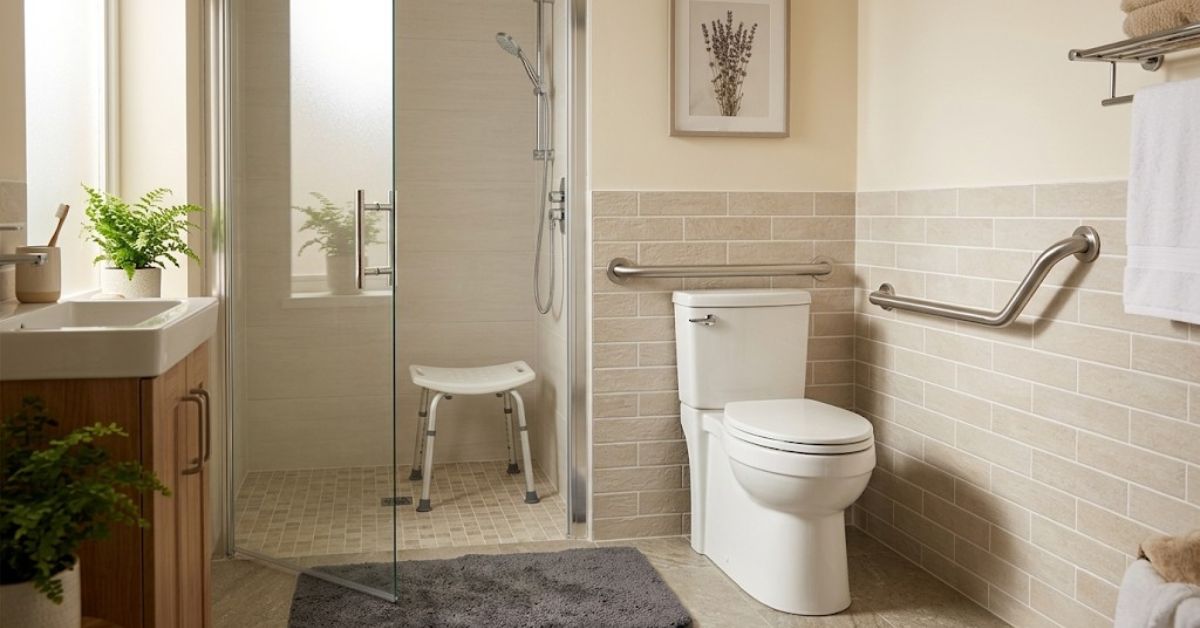
The bathroom is the highest-risk room in the home and also where small changes deliver the greatest safety impact. Every modification below can be added without any construction:
- Grab bars at toilet and shower: Professional installation into wall studs takes about an hour per bar. Do not use suction-cup grab bars — they can fail catastrophically
- Non-slip bath mats and shower strips: Textured strips inside the tub or shower prevent the specific slip that causes most bathroom falls
- Raised toilet seat or comfort-height toilet: Portable raised seats attach without tools; comfort-height toilet installation takes 1–2 hours
- Shower chair or transfer bench: Portable equipment, no installation needed
- Handheld shower wand: Replaces existing showerhead in 10 minutes
- Improved lighting: Higher-wattage bulbs, motion-activated nightlight for the pathway to the bathroom
Typical total cost: $250–$800 for a comprehensive bathroom safety package
For more detail, see: Bathroom Safety Modifications Guide.
The Bedroom
Bedroom Quick Wins
Bedroom modifications focus on safe transfers and safe nighttime navigation to the bathroom — the most common cause of nighttime falls in seniors.
- Bed rail or bed handle: Provides support for getting in and out of bed. Portable models install without tools
- Bed at appropriate height: Ideal height is where feet rest flat on the floor when seated on the edge. Bed risers can raise a low bed; a lower mattress or bed frame can lower a high one
- Motion-activated nightlights: Illuminate the pathway to the bathroom without needing to find a switch. Install in bedroom, hallway, and bathroom
- Bedside commode: For seniors with frequent nighttime bathroom trips or reduced mobility, a bedside commode eliminates the risky nighttime walk
- Phone within reach: Cordless phone or smartphone charged on the nightstand for emergency calls
- Emergency response device: Wearable button for calling for help. Basic models start around $30/month
Typical total cost: $100–$400 (plus optional monthly service for emergency response)
The Kitchen
Kitchen Quick Wins
Kitchen accessibility improvements focus on reducing reaching, stretching, and awkward transfers — activities that cause falls and injuries.
- Reorganise frequently used items: Move daily-use dishes, glasses, and utensils to counter-height storage. Reserve high shelves for rarely used items
- Reach extenders: Simple grabber tools for retrieving items that must remain on high shelves
- Non-slip flooring mats: In front of the sink and stove where standing time is long
- Lever-style faucet handles: Replace round knobs with lever handles for easier operation (30-minute swap)
- Stove safety: Auto-shutoff stove timers prevent forgotten burners; magnifiers can help read dial settings
- Improved task lighting: Under-cabinet lights over prep areas and stovetop for better visibility
- Sturdy step stool with handrail: Never a standard step stool for anyone with balance concerns
Typical total cost: $150–$500
The Living Room
Living Room Quick Wins
Living room modifications focus on comfortable seating with easy transfers, clear pathways, and good lighting for reading and other activities.
- Furniture at appropriate heights: Chairs should be 17–19 inches high with firm cushions and armrests. Sofas too low can be dangerous; chair risers can add height
- Lift chair recliner: Electric chairs that raise and tilt to help the person stand up. Range $700–$2,500. Sometimes covered by Medicare when medically justified
- Clear pathways: Remove clutter, cords, and loose rugs. Rearrange furniture for wide, unobstructed paths between doorways
- Secure area rugs: Non-slip rug pads or double-sided tape to prevent rugs sliding. Better yet, remove them entirely
- Rocker light switches: Replace toggle switches with rocker switches (easier with reduced grip)
- Reading lamps at seating: Bright, adjustable task lighting for reading and hobbies
- Remote control organiser: Keep remotes and phones in a fixed spot within easy reach
Typical total cost: $100–$300 (excluding lift chair)
Hallways and Entry
Hallway & Entry Quick Wins
Entry and hallway modifications ensure the senior can safely get in and out of the home and navigate between rooms.
- Sturdy exterior handrails: Both sides of every entry step. Loose or wobbly handrails create dangerous false confidence — repair or replace them
- Threshold ramps: Small ramps that eliminate the step at doorways. Range $25–$100. Solve the trip hazard without construction
- Improved entry lighting: Motion-activated exterior lights and adequate interior entry lighting
- Doormat security: Non-slip backing on all entry mats. Loose entry mats are a common trip hazard
- Entry bench: A sturdy bench with a firm seat for putting on and taking off shoes
- Handrails in long hallways: Wall-mounted handrails or grab rails can be added for extra security
- Package solutions: Front porch shelves or drop boxes so delivery items don't require bending
Typical total cost: $150–$600
Stairs
Stair Quick Wins
Staircase modifications reduce fall risk on one of the highest-risk areas of the home. Full stair lifts are covered elsewhere; these are the "no construction" options:
- Handrails on both sides: Every staircase should have handrails on both sides. Add a second handrail where only one exists — a 2–4 hour installation
- Handrail extensions: Handrails should extend past the top and bottom step for support during those critical transitions
- Stair tread strips or runners: Non-slip strips on each tread, or a secured stair runner, improve traction significantly
- Contrast marking: Reflective tape or paint on the edge of each tread makes the step visible to aging eyes
- Improved lighting: Light switches at both top and bottom of the staircase. LED strip lighting along tread edges is a modern option
- Clear the stairs: Never store items on the staircase. The "leave items for the next trip up" habit is a fall waiting to happen
Typical total cost: $100–$500 for comprehensive stair safety upgrades
When stair modifications no longer provide adequate safety, a stair lift is the natural next step. See: Stair Safety Tips for Seniors.
Quick Wins: Under $100, Under an Hour
These modifications can each be completed in under an hour, cost less than $100 each, and don't require any tools beyond basic household screwdrivers. Perfect starting points for a family beginning to think about accessibility:
Non-slip bath mat inside the tub
Prevents the wet-surface slip that causes many bathroom falls. Replace annually as the suction cups wear out.
Motion-activated nightlights
Plug-in units for hallways, bathroom pathway, and bedroom. Eliminate the risky nighttime search for light switches.
Raised toilet seat
Portable raised seat that attaches without tools. Makes rising from the toilet significantly easier for people with knee or hip issues.
Reach extender / grabber tool
Grabs items from high shelves without stretching or standing on stools. Multiple sizes for different needs.
Non-slip rug pads for all rugs
Better than double-sided tape. Prevent rugs from sliding — the cause of many trip-and-fall incidents.
Handheld shower wand
Replaces existing showerhead in 10 minutes. Allows seated bathing and easier reach for hair washing.
Cordless phone with large buttons
Keep one on the nightstand for nighttime emergencies. Large-button models are easier to see and dial.
Threshold ramp for doorway
Eliminates the trip hazard at exterior doors. Also allows walker or wheelchair access when needed.
Every family should start with these quick wins. Even if larger modifications are eventually needed, completing the under-$100 improvements first reduces immediate fall risk, builds trust in the accessibility process, and demonstrates that changes don't have to be disruptive.
The Next Tier: Professional Installation, No Construction
Slightly larger modifications require professional installation but still no construction work. These typically cost $200–$2,000 each and can usually be completed in a single visit:
| Modification | Typical Cost (NJ) | Installation Time |
|---|---|---|
| Grab bar package (3–5 bars) | $300 – $700 | 2–3 hours |
| Comfort-height toilet | $400 – $800 | 1–2 hours |
| Second handrail on staircase | $200 – $500 | 2–4 hours |
| Tub cut-out conversion | $1,500 – $4,000 | 1 day |
| Portable ramp (aluminum) | $300 – $1,500 | Same day |
| Lift chair recliner | $700 – $2,500 | Delivered ready to use |
| Emergency response system | $30 – $50/month + device | Same day setup |
| Improved bathroom lighting | $200 – $600 | 2–3 hours |
Prioritisation strategy: Address the bathroom first, then entry/exit, then stairs, then bedroom, then general home. This ordering reflects the relative risk — bathrooms cause the most falls, entries determine whether the person can leave the home, and stairs are the highest-severity fall location. Fixing the top-risk areas first delivers the greatest safety benefit per dollar spent.
When Small Changes Aren't Enough
Small changes work well for many situations but reach their limits. Consider larger modifications when:
- Stairs remain unsafe despite improvements: Handrails, contrast marking, and lighting help — but if the person still cannot safely use the stairs, a stair lift is the appropriate next step
- Bathroom transfers remain difficult: Grab bars and a shower chair help — but if getting into the tub still requires substantial effort or risk, a walk-in shower conversion may be needed
- Wheelchair mobility becomes necessary: Portable ramps and threshold ramps work for temporary needs — but permanent wheelchair use typically requires a proper wheelchair ramp and possibly doorway widening
- The person has active mobility decline: Small changes work when the trajectory is stable. When function is actively declining, planning larger modifications proactively delivers better outcomes than repeatedly upgrading small ones
When larger modifications become appropriate, funding assistance often becomes available too. See our guides: Free Stair Lift Options, VA Grants, and NJ Medicaid Plans.
A Sample Accessibility Package Under $1,500
Here's a comprehensive small-change accessibility package that a family might implement for a Northern NJ home, all without any construction work:
| Item | Typical Cost |
|---|---|
| Grab bar package (3 bars installed) | $450 |
| Non-slip bath mat + shower strips | $25 |
| Raised toilet seat | $40 |
| Handheld shower wand + install | $70 |
| Motion-activated nightlights (5 pack) | $40 |
| Non-slip rug pads for all rugs | $60 |
| Second stair handrail + install | $350 |
| Stair tread contrast strips | $30 |
| Threshold ramp for front door | $80 |
| Reach extender tool | $25 |
| Rocker light switches (kitchen & bath) | $70 |
| Bedside phone with large buttons | $50 |
| Improved bathroom lighting | $150 |
| Total (installed) | $1,440 |
This package addresses every major risk area in a typical home. It can be completed over a single weekend by a professional installer. It requires no permits, no structural changes, and no disruption to daily life. And it delivers substantial improvement in safety and independence.
Everhome Mobility provides small-change accessibility packages across Northern NJ — professional grab bar installation, handrails, threshold ramps, lighting improvements, and more, all without the disruption of major remodeling.
Request a Free Small-Change Assessment →Frequently Asked Questions
How can I make my home more accessible without expensive remodeling?
Focus on small, targeted modifications: grab bars, non-slip surfaces, improved lighting, comfort-height toilets, threshold ramps, second handrails on stairs, and clear pathways. A comprehensive package of these modifications typically costs $500–$2,500 total and can be installed in a weekend without any construction, permits, or major disruption. These small changes address the majority of home fall risks.
What are the most important accessibility improvements to make first?
Start with the bathroom — it's the highest-risk room. Install grab bars at the toilet and shower, add non-slip surfaces, and improve lighting. Second priority is entry/exit — ensure sturdy handrails at all entry steps and eliminate trip hazards. Third is stairs — add handrails to both sides, mark tread edges for visibility. This risk-based prioritisation delivers the greatest safety benefit per dollar spent.
Can accessibility improvements be reversed if we sell the house?
Yes, most small-change modifications are reversible or neutral for resale. Grab bars can be removed and small holes patched. Raised toilet seats and shower chairs are portable. Threshold ramps are removable. Non-slip mats come up easily. Handrails and rocker switches are typically viewed positively by buyers. The concern about accessibility features hurting home value is largely outdated — modern residential accessibility products are designed with aesthetics and reversibility in mind.
Do renters need permission to make accessibility changes?
Yes, but landlords are generally required to allow reasonable accessibility modifications under Fair Housing laws for tenants with disabilities. Small changes like non-slip mats, motion nightlights, portable raised toilet seats, and shower chairs typically need no landlord permission. Changes involving screws or hardware (grab bars, handrails) require landlord permission — put the request in writing citing Fair Housing Act reasonable accommodation. Most landlords approve when the tenant offers to restore the space when moving.
How do I know if my home needs professional accessibility assessment?
Consider a professional assessment when: someone in the home has experienced a fall or near-fall, someone has been recently discharged from hospital or rehabilitation, someone is beginning to avoid parts of the home due to mobility concerns, multiple modifications are being considered, or you're unsure which modifications will actually help. Everhome Mobility offers free in-home assessments across Northern NJ.
Can small accessibility changes really prevent falls?
Yes. Research consistently shows that home safety modifications — even simple ones like grab bars, improved lighting, and non-slip surfaces — reduce fall frequency in older adults. The mechanism is straightforward: most home falls result from correctable environmental factors, and addressing those factors reduces the fall risk. Combined with other fall prevention strategies (regular exercise, medication review, vision checks), small home accessibility changes are among the most effective fall prevention interventions available.