
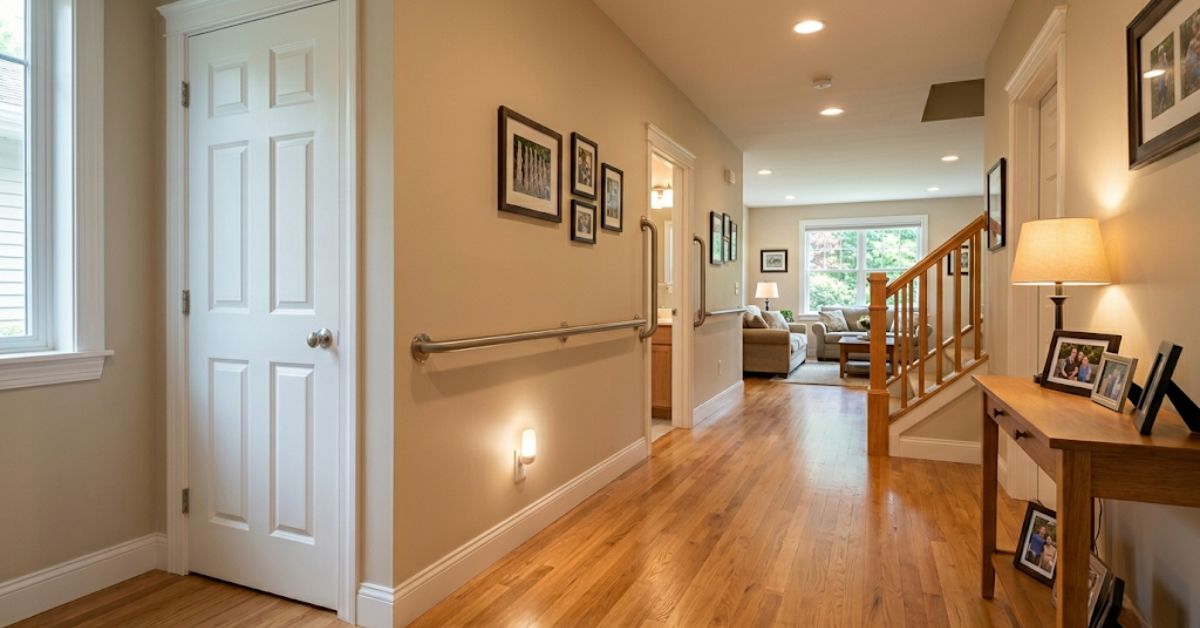
Falls are not an inevitable consequence of aging — they are a preventable outcome that results from specific, identifiable risk factors combining in predictable ways. The research on this is unambiguous: the vast majority of home falls in older adults are preventable with the right combination of home modifications, exercise, medication review, and vision care.
Yet falls remain the leading cause of injury-related death among adults over 65 in the United States. More than 36 million falls occur among older Americans every year — approximately one in four adults over 65 falls annually. The consequences range from minor bruises to hip fractures that permanently alter a person's trajectory, to deaths that could have been avoided with a grab bar, a removed rug, or a stair lift.
This guide is written for NJ families who want to take the threat seriously and act before a fall forces the conversation. It covers the real risk factors, the modifications that make the biggest difference, and a practical action plan for making any home significantly safer.
The Scale of the Problem
Behind these numbers are individual stories — a parent who fractured a hip on a wet bathroom floor, a grandparent who fell on the stairs at 2am and was not found for hours, a spouse who became afraid to move around their own home after a fall. Fall prevention is not an abstract public health concern. It is personal, and for most families, it becomes urgent far sooner than expected.
Why Falls Happen: Understanding the Risk Factors
Falls almost never have a single cause. They are typically the result of multiple risk factors converging at the same moment — a slippery floor, combined with poor lighting, combined with a medication side effect that affects balance, combined with a rug that catches a foot. Remove any one of those factors and the fall may not happen.
This is why fall prevention is so effective — you do not need to eliminate every risk factor, just enough of them to break the chain.
Intrinsic Risk Factors (Within the Person)
- Age-related balance changes: The vestibular system, proprioception, and reaction time all decline with age, making it harder to recover from a stumble
- Muscle weakness: Lower body strength — particularly in the quadriceps and ankles — is one of the strongest predictors of fall risk
- Medications: Blood pressure medications, sedatives, antidepressants, antihistamines, and diuretics all increase fall risk — often through dizziness, drowsiness, or orthostatic hypotension
- Vision changes: Reduced depth perception, contrast sensitivity, and peripheral vision make it harder to identify hazards and judge distances accurately
- Chronic conditions: Arthritis, Parkinson's disease, diabetes (neuropathy), stroke, and heart failure all significantly increase fall risk
- Fear of falling: Paradoxically, a fear of falling reduces confidence and activity levels, which leads to further deconditioning and actually increases fall risk over time
- Previous fall history: Having fallen once is one of the strongest predictors of falling again — the first fall is often the warning that risk is elevated
Extrinsic Risk Factors (In the Environment)
- Loose or unsecured area rugs — the single most common environmental trip hazard
- Poor lighting, especially at night on pathways from bedroom to bathroom
- Wet or slippery bathroom surfaces without anti-slip treatment or grab bars
- Stairs without handrails, or with handrails that do not extend the full length
- High tub wall step-over with no support
- Clutter and obstacles in pathways and hallways
- Inappropriate footwear — socks on hardwood, loose slippers, unsupported shoes
- Furniture positioned too low or too high — chairs and beds that are difficult to rise from
- Outdoor hazards — uneven walkways, unmarked steps, ice and snow on entries
Key insight: Environmental risk factors are the most actionable. You cannot reverse age-related balance changes overnight, but you can remove a rug today, install a nightlight this week, and have grab bars installed next week. Acting on environmental factors produces immediate, measurable risk reduction.
The Highest-Risk Moments in Any Day
Falls do not happen randomly throughout the day. Research consistently identifies specific high-risk moments that account for the majority of serious falls:
| Moment | Why It's High Risk | Primary Prevention |
|---|---|---|
| Getting out of bed at night | Disorientation, low light, blood pressure drop on standing | Nightlights, bed rails, clear pathway |
| Entering/exiting the shower or tub | Wet surface, one-legged balance, high step-over | Grab bars, non-slip mat, tub cut-out or walk-in shower |
| Rising from toilet | Requires significant leg strength, no stable support nearby | Grab bars at toilet, raised toilet seat |
| Descending stairs | Forward weight shift, reduced depth perception, concentration required | Full-length handrails both sides, stair lift if needed |
| Entering/exiting the home | Step-over at threshold, outdoor steps without rail, wet entry | Ramp, handrails, threshold modification |
| Reaching overhead or bending low | Shifts centre of gravity, reduces stability | Reorganise storage to accessible heights |
| Carrying items while walking | Limits ability to use arms for balance recovery | Use a bag or basket rather than carrying in arms |
The Most Effective Home Modifications for Fall Prevention
Not all fall prevention strategies deliver equal results. Here is what the evidence — and our direct experience across hundreds of NJ homes — shows to be the highest-impact interventions:
1. Grab Bars at the Toilet and Shower
Consistently the highest return on investment in any home safety modification programme. A professionally installed grab bar at the toilet costs $150–$400 and takes under an hour. It directly addresses the two highest fall-risk moments in any bathroom — rising from the toilet and entering or exiting the shower. Nothing else in a standard home safety budget delivers more safety per dollar.
2. Non-Slip Treatment in the Bathroom
Wet tile is among the most dangerous surfaces in any home. Anti-slip treatments, non-slip mats inside the shower, and non-slip bath mats outside the tub address this directly. Cost: $20–$200. Immediate installation. High impact.
3. Nightlights on the Bedroom-to-Bathroom Pathway
Nighttime trips to the bathroom account for a disproportionate number of serious falls — particularly among older adults who take diuretics. Motion-activated nightlights on every segment of the path from bed to bathroom eliminate the need to navigate in complete darkness. Cost: $10–$40. Takes minutes to install.
4. Removal of Loose Rugs
Loose area rugs are involved in a significant proportion of home falls. They catch feet, slide on hard floors, and create unpredictable surface transitions. Removing them costs nothing and produces immediate risk reduction. If rugs are desired for aesthetic reasons, they must be secured with non-slip backing on all four edges.
5. Stair Lift Installation
For multi-story homes where the senior uses stairs daily with any difficulty, a stair lift is the most impactful single modification available. Stairs are the site of some of the most serious home falls — and a stair lift eliminates daily stair use entirely, removing the risk at the source rather than trying to manage it with rails and caution.
6. Handrail Upgrades
Many older NJ homes have handrails on only one side of the staircase, or rails that do not extend the full length from top to bottom. Full-length rails on both sides of every staircase provide critical bilateral support during descent — the highest-risk stair movement.
7. Walk-In Shower or Tub Cut-Out
Eliminating the tub step-over removes one of the most dangerous daily movements for older adults. A tub cut-out achieves this at $300–$700. A full walk-in shower conversion achieves it more comprehensively at $3,000–$12,000. Both are significantly safer than continuing to step over a standard tub wall.
8. Wheelchair Ramp or Handrail at Home Entry
Exterior steps without adequate handrails are a major fall risk — particularly in wet or icy weather. A wheelchair ramp or platform lift addresses this for users with significant mobility limitations; handrail upgrades on exterior steps address it for those who can manage steps with proper support.
Exercise: The Underrated Fall Prevention Tool
Home modifications address the environmental side of fall risk. Exercise addresses the intrinsic side — and research shows it is equally important.
Programmes specifically designed for fall prevention — balance training, lower body strengthening, and Tai Chi — have been shown to reduce fall rates by 23–40% in older adults. The most effective programmes combine:
- Balance training: Standing on one leg, tandem stance (heel-to-toe), stepping exercises
- Lower body strengthening: Chair squats, calf raises, leg lifts — exercises that build the quadriceps and ankle strength needed to recover from a stumble
- Gait training: Working with a physiotherapist on walking pattern, stride length, and foot clearance
- Tai Chi: Consistently one of the most evidence-supported fall prevention interventions — particularly for improving balance and body awareness
Ask your GP or a physiotherapist about fall prevention exercise programmes. Many NJ senior centres and community organisations offer free or subsidised classes specifically designed for fall prevention.
Medications and Vision: Two Often-Overlooked Risk Factors
Medication Review
Polypharmacy — taking four or more medications simultaneously — significantly increases fall risk. Blood pressure medications cause orthostatic hypotension (dizziness on standing). Sedatives and sleep aids reduce reaction time. Diuretics cause nighttime bathroom trips. Antidepressants affect balance.
A medication review with a GP or pharmacist specifically looking at fall risk is one of the highest-value clinical interventions available for older adults at elevated fall risk. Many medications can be adjusted in dose, substituted for safer alternatives, or eliminated entirely — with meaningful reduction in fall risk as a result.
Vision Check
Uncorrected vision problems — including cataracts, glaucoma, and macular degeneration — significantly impair the ability to detect hazards, judge distances, and recover from stumbles. An annual vision check and appropriate correction (including cataract surgery when indicated) reduces fall risk measurably. Bifocals and progressive lenses can also increase fall risk for some individuals — discuss with an optometrist.
After a Fall: What to Do Next
If a fall has already happened, the response matters as much as the prevention going forward:
- Medical assessment: Any fall that results in pain, swelling, or difficulty moving should be assessed by a doctor — many fractures, particularly in the spine and pelvis, are not immediately obvious
- Fall investigation: Identify exactly what caused the fall — time of day, location, what the person was doing, what surface they were on. This information is essential for targeted prevention
- Home safety assessment: A fall is the clearest signal that existing safety measures are insufficient. Schedule a professional CAPS assessment immediately
- Medication review: Discuss the fall with the GP and request a medication review specifically focused on fall risk
- Exercise programme: If not already enrolled in a fall prevention exercise programme, this is the moment to start
- Address fear: If the person is restricting their activity out of fear of falling again, involve a physiotherapist — activity restriction accelerates deconditioning and increases future risk
A fall is not just an accident — it is a signal. It tells you that the risk load in that person's life has exceeded their capacity to manage it safely. The right response is not caution and restriction — it is investigation, modification, and building back strength and confidence.
Building a Fall Prevention Plan for Your NJ Home
Effective fall prevention is not a single action — it is a plan that addresses both the home environment and the person living in it. Here is a practical starting framework:
- Schedule a free CAPS in-home assessment with Everhome Mobility — identify every environmental hazard and get a prioritised modification plan
- Act on the free and low-cost fixes immediately — remove rugs, install nightlights, clear pathways
- Schedule a GP appointment for a medication review focused on fall risk
- Book an annual vision check if one has not been done recently
- Enrol in a fall prevention exercise programme at a local NJ senior centre or with a physiotherapist
- Install the highest-priority modifications first — grab bars, non-slip bathroom treatment, handrails
- Plan for larger modifications — stair lift, ramp, bathroom conversion — with funding options explored in parallel
- Review and update the plan annually or after any significant health change
Everhome Mobility provides free CAPS-certified in-home safety assessments across Bergen County, Essex County, Passaic County, and Hudson County NJ — with same-week availability for most homes.
Book a free CAPS-certified home safety assessment — we identify every fall risk in your home and give you a clear, prioritised action plan at no cost and no obligation.
Book Your Free Assessment →Frequently Asked Questions
What is the most common cause of falls in seniors at home?
The most common environmental causes are loose area rugs, poor lighting (especially at night), wet bathroom surfaces without grab bars or non-slip treatment, and stairs without full-length handrails. Falls almost always result from multiple risk factors combining — removing even one or two can break the chain and prevent the fall.
What is the most effective fall prevention strategy?
Research consistently shows that a combination of targeted exercise (particularly balance training and lower body strengthening), home modification, and medication review produces the greatest reduction in fall rates. No single intervention is as effective as a comprehensive approach addressing both the person and the environment.
When should a stair lift be considered for fall prevention?
A stair lift should be seriously considered when a senior uses stairs daily and has experienced any of the following: a previous fall on or near the stairs, difficulty gripping the handrail, requiring assistance to use the stairs, or expressing anxiety about using the stairs. The staircase is one of the highest fall-risk locations in any multi-story home — addressing it proactively rather than reactively is strongly recommended.
How much does a fall cost if it results in hospitalisation?
The average cost of a fall-related hospitalisation in the United States exceeds $30,000. A hip fracture — one of the most common serious fall injuries — averages $40,000–$50,000 in acute care costs alone, not including rehabilitation, ongoing care needs, or the productivity impact on family caregivers. The economics of fall prevention modifications are compelling even at the high end of the cost range.
What should I do if my parent refuses to make home modifications?
This is one of the most common challenges families face. Approaches that tend to work: framing modifications as enabling independence rather than admitting limitation, starting with small and low-profile changes like grab bars, involving a trusted physician or occupational therapist who can reinforce the recommendation clinically, and having the senior participate in choosing the specific products and aesthetics. A professional CAPS assessor is often more persuasive than a family member because the recommendation comes from an objective expert rather than a worried child.