
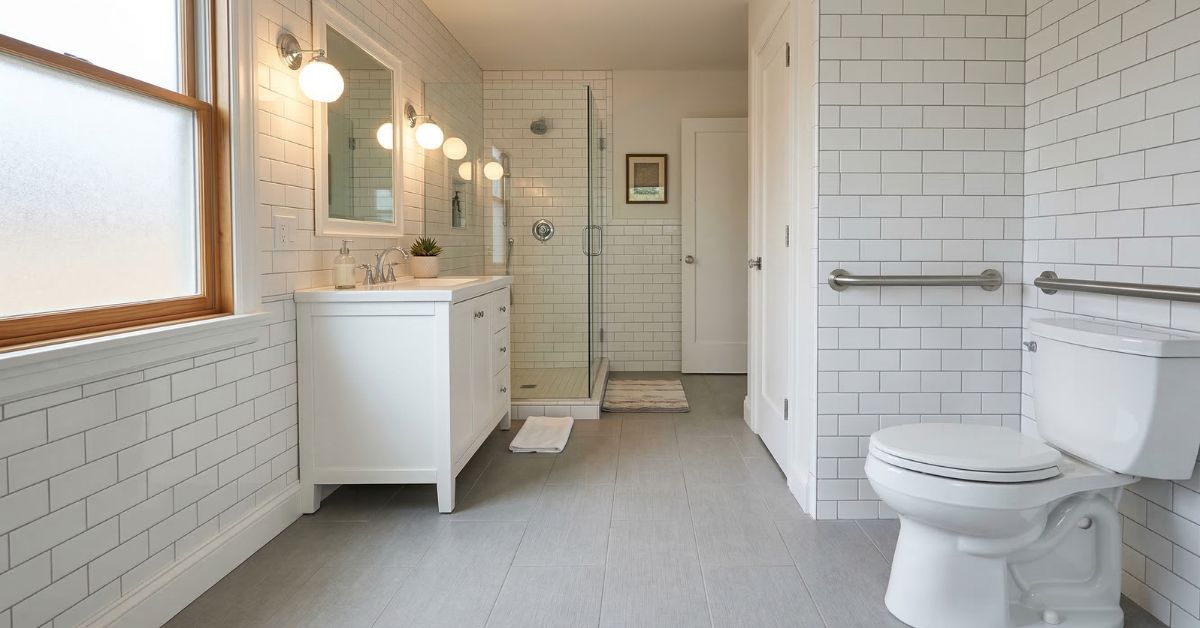
The bathroom is statistically the most dangerous room in the home. According to the Centers for Disease Control and Prevention, over 235,000 people visit emergency rooms every year due to bathroom injuries — and the overwhelming majority are falls. For adults over 65, a serious bathroom fall can be the beginning of a significant decline in independence.
The good news is that most bathroom falls are preventable. Targeted safety modifications — from grab bars to walk-in shower conversions — can dramatically reduce fall risk, restore confidence, and help a family member continue living safely and independently at home.
In this guide, we break down every major bathroom safety modification, its real cost in New Jersey, and how to prioritize upgrades based on your specific situation and budget.
Bathroom Safety Modification Cost Overview
Here is a complete snapshot of the most common bathroom safety modifications and their installed costs in 2026:
| Modification | Cost Range | DIY Possible? | Impact on Safety |
|---|---|---|---|
| Grab bar installation (per bar) | $150 – $300 | Not recommended | Very High |
| Tub cut-out (step reducer) | $300 – $600 | No | High |
| Raised toilet seat | $30 – $200 | Yes | Medium–High |
| Comfort-height toilet replacement | $500 – $1,500 | No | High |
| Toilet safety frame | $60 – $200 | Yes | Medium |
| Handheld showerhead | $50 – $300 | Yes | Medium |
| Shower bench or seat | $30 – $400 | Yes | Medium–High |
| Non-slip flooring treatment | $200 – $600 | Partial | High |
| Non-slip floor replacement | $800 – $3,500 | No | High |
| Walk-in shower conversion | $3,000 – $10,000 | No | Very High |
| Roll-in accessible shower | $7,000 – $18,000 | No | Very High |
| Walk-in tub installation | $3,500 – $12,000 | No | High |
Grab Bars: The Highest-Impact, Lowest-Cost Modification
If there is one bathroom safety modification that every home with a senior or individual with limited mobility should have, it is grab bars. No other modification delivers more safety benefit per dollar spent.
Grab bars provide a secure handhold at the exact moments of highest fall risk: stepping into and out of the shower or tub, sitting down and rising from the toilet, and moving through a wet bathroom floor. Strategically placed bars can prevent the majority of bathroom falls before they happen.
Where Should Grab Bars Be Installed?
| Location | Recommended Bar | Mounting Height |
|---|---|---|
| Beside toilet (dominant side) | 32–36 inch horizontal bar | 33–36 inches from floor |
| Beside toilet (both sides ideal) | 32–36 inch horizontal bar | 33–36 inches from floor |
| Inside shower (back wall) | 36 inch horizontal bar | 33–36 inches from floor |
| Shower entry (vertical) | 16–24 inch vertical bar | 48–52 inches from floor |
| Tub entry (angled) | 24 inch angled bar | At user's hip height |
| Along tub (long wall) | 24–32 inch horizontal bar | 33–36 inches from floor |
Why Professional Installation Matters
This point cannot be overstated: a grab bar that pulls free from the wall is more dangerous than no grab bar at all. A properly installed grab bar must support a minimum of 250 lbs of force applied in any direction — which requires anchoring into wall studs or using appropriate toggle anchors in tile walls.
Professional grab bar installation from Everhome Mobility runs $150–$400 per bar and is typically completed in under an hour per bar. For a comprehensive bathroom installation of 4–6 bars, most homeowners pay $600–$1,800 total — one of the best safety investments available.
Style note: Decorative grab bars are now available in brushed nickel, oil-rubbed bronze, and matte black finishes that look identical to designer towel bars. Safety and aesthetics no longer have to be a trade-off.
Tub Cut-Outs: The Budget-Friendly Tub Solution
Stepping over the side of a standard bathtub — typically 18–24 inches high — is one of the most dangerous movements in the home for older adults. A tub cut-out removes a section of the tub wall and installs a watertight insert, reducing the step height to just 3–5 inches.
This modification is completed in approximately two hours, requires no plumbing work, and costs $300–$600 fully installed. It is one of the most cost-effective high-impact bathroom safety modifications available — particularly for homeowners who want to keep their existing tub rather than converting to a walk-in shower.
The watertight insert prevents water leakage, and the modification is essentially permanent. The tub retains its full function for bathing or showering.
Walk-In Shower Conversions
Converting a standard tub and shower combination into a walk-in shower with a low or zero-threshold entry eliminates the most dangerous obstacle in the bathing routine — the step over the tub edge. For individuals using walkers, wheelchairs, or shower chairs, a walk-in shower is often the difference between safe independent bathing and requiring a caregiver for every shower.
What Affects Walk-In Shower Conversion Cost?
- Bathroom size: Larger spaces give more design options but cost more to tile and waterproof
- Plumbing changes: If the drain needs to be relocated, costs increase significantly
- Prefab vs. custom tile: A prefab shower unit is fastest and least expensive; custom tile is more durable and aesthetically flexible but adds cost
- Door type: A frameless glass door adds $500–$1,500 vs. a simple shower curtain
- Accessibility features: Fold-down shower seats, grab bars, and handheld showerheads add $400–$1,200
| Conversion Type | Cost Range | Best For |
|---|---|---|
| Basic walk-in shower (prefab) | $3,000 – $5,500 | Budget-conscious, standard bathrooms |
| Custom tiled walk-in shower | $5,500 – $10,000 | Larger bathrooms, aesthetic preference |
| Roll-in accessible shower | $7,000 – $18,000 | Wheelchair users, full accessibility |
| Walk-in tub installation | $3,500 – $12,000 | Users who prefer soaking baths |
A walk-in shower conversion is the most transformative single bathroom safety modification available. For many families, it is what makes the difference between a loved one being able to bathe independently versus needing daily caregiver support.
Toilet Safety Modifications
Sitting down and rising from a standard toilet is one of the most physically demanding daily movements for people with hip replacements, knee pain, arthritis, or general weakness. Standard toilet seats sit at 15–17 inches — too low for many older adults to manage safely without assistance.
Raised Toilet Seats
Raised toilet seats clip onto the existing toilet and add 2–6 inches of height, bringing the seat to a more manageable level. They cost $30–$200 and can be installed without tools in minutes. They are an excellent first step and a practical option for renters or temporary needs.
Comfort-Height Toilet Replacement
ADA-compliant comfort-height toilets sit at 17–19 inches — significantly easier to use than standard toilets and far more durable and stable than add-on raised seats. A comfort-height toilet replacement costs $500–$1,500 installed and is the permanent solution for long-term bathroom accessibility.
Toilet Safety Frames
Freestanding grab bar frames that fit around the toilet provide armrests for lowering and rising. They require no installation and cost $60–$200. They are less secure than wall-mounted grab bars but a practical option when wall mounting is not possible.
Non-Slip Flooring: An Underrated Safety Priority
Wet tile floors are extremely slippery — responsible for a significant percentage of bathroom falls. Many homeowners overlook flooring because the existing tile looks fine, but appearance has nothing to do with slip resistance when wet.
Options by Cost
- Non-slip bath mats: $15–$50 — effective but must be secured properly; loose mats are a trip hazard
- Professional anti-slip treatment: $200–$600 — a chemical treatment applied to existing tile that significantly increases wet traction without changing appearance
- Non-slip floor coating: $300–$800 — a textured coating applied over existing floors
- Full floor replacement: $800–$3,500 — replacement with textured vinyl or porcelain tile rated for wet areas; the most permanent and effective solution
Quick test: Wet a small area of your bathroom floor and rub your foot across it in socks. If it feels slippery, it is a fall risk. Professional anti-slip treatment is a fast, low-cost way to address this without replacing the floor.
How to Prioritize Bathroom Safety Modifications
If you are working with a defined budget and cannot do everything at once, here is the recommended priority order based on fall risk reduction per dollar spent:
- Grab bars at toilet and shower/tub entry — highest risk points, highest return on investment
- Non-slip treatment or mats on wet floor areas — fast, low cost, immediate impact
- Raised toilet seat or toilet safety frame — addresses a high-risk daily activity
- Tub cut-out — if tub entry is a significant barrier, this is the budget-friendly fix
- Handheld showerhead and shower bench — enables seated bathing, reduces fatigue and slip risk
- Walk-in shower conversion — the comprehensive long-term solution when budget allows
Does Insurance Cover Bathroom Safety Modifications?
Standard health insurance and Medicare Parts A and B do not cover elective bathroom modifications. However, several programs can help offset costs for eligible individuals:
VA HISA Grant
Veterans with service-connected disabilities may qualify for up to $6,800 through the VA's Home Improvement and Structural Alterations grant. This can cover grab bar installation, tub cut-outs, shower conversions, and other bathroom modifications. Apply through your local VA regional office or va.gov.
NJ Medicaid MLTSS
New Jersey's Medicaid Managed Long Term Services and Supports program may cover bathroom modifications for eligible participants. Medical necessity documentation from a healthcare provider is required. Contact your Medicaid case manager to inquire.
Medicare Advantage (Part C)
Some Medicare Advantage plans include supplemental home modification benefits that may cover grab bars and other bathroom safety modifications. Coverage varies significantly by plan — call the member services number on your card to ask specifically about home modification benefits.
Area Agency on Aging Grants
New Jersey's county-level Area Agencies on Aging administer grants and programs that can fund home modifications for seniors. Eligibility is typically based on age, income, and functional need. Contact your county's aging services office for current program availability.
Getting a Professional Bathroom Safety Assessment
The most effective way to identify which modifications your bathroom needs is a professional in-home assessment by a Certified Aging-in-Place Specialist (CAPS). During an assessment, our team will:
- Walk through every bathroom in the home
- Identify specific fall risk points based on the individual's mobility and the bathroom layout
- Recommend modifications in priority order based on safety impact and budget
- Provide a written quote for all recommended work
- Identify any funding programs the homeowner may qualify for
Everhome Mobility provides free bathroom safety assessments across North New Jersey — Bergen, Essex, Passaic, Hudson, Morris, and surrounding counties. Most installations are scheduled within 48–72 hours of your assessment.
Book a free bathroom safety assessment with our CAPS-certified team — no pressure, no obligation.
Book Your Free Assessment →Frequently Asked Questions
How many grab bars does a bathroom need?
A comprehensive safety installation for a standard bathroom typically includes 4–6 bars: 1–2 at the toilet, 2 inside the shower (one horizontal, one at entry), and 1–2 at the tub. Most families start with the toilet and shower entry — the two highest-risk points — and add more over time.
How long does a walk-in shower conversion take?
A basic prefab walk-in shower conversion typically takes 2–4 days. A custom-tiled conversion may take 5–10 days depending on the scope of work, tile selection, and whether plumbing needs to be relocated.
Can grab bars be installed in tile walls?
Yes — this is actually one of the most common installation scenarios. Experienced installers use specialized drill bits and appropriate anchors to mount bars securely in tiled walls without cracking the tile. Everhome Mobility installs grab bars in tile regularly and warrants all installations.
Are walk-in tubs worth the cost?
Walk-in tubs eliminate the step-over barrier and add therapeutic features like jets and heated seats. However, they require the user to enter before filling and wait for the tub to drain before exiting — leaving them sitting in cooling water. For users who primarily shower rather than bathe, a walk-in shower conversion is usually the more practical choice. We discuss both options during your free assessment.
How long do bathroom safety modifications last?
Stainless steel grab bars last indefinitely with minimal maintenance. Tub cut-out inserts are permanent and durable. Walk-in shower conversions last 15–25 years depending on materials. Anti-slip floor treatments typically last 3–5 years before reapplication.
Can bathroom modifications be done in a rental home?
It depends on the lease and the landlord. Many landlords approve accessibility modifications — especially grab bars — because they improve the property. In New Jersey, the Fair Housing Act requires landlords to allow reasonable modifications for tenants with disabilities, though the tenant typically bears the cost. We can provide documentation to support your request if needed.