
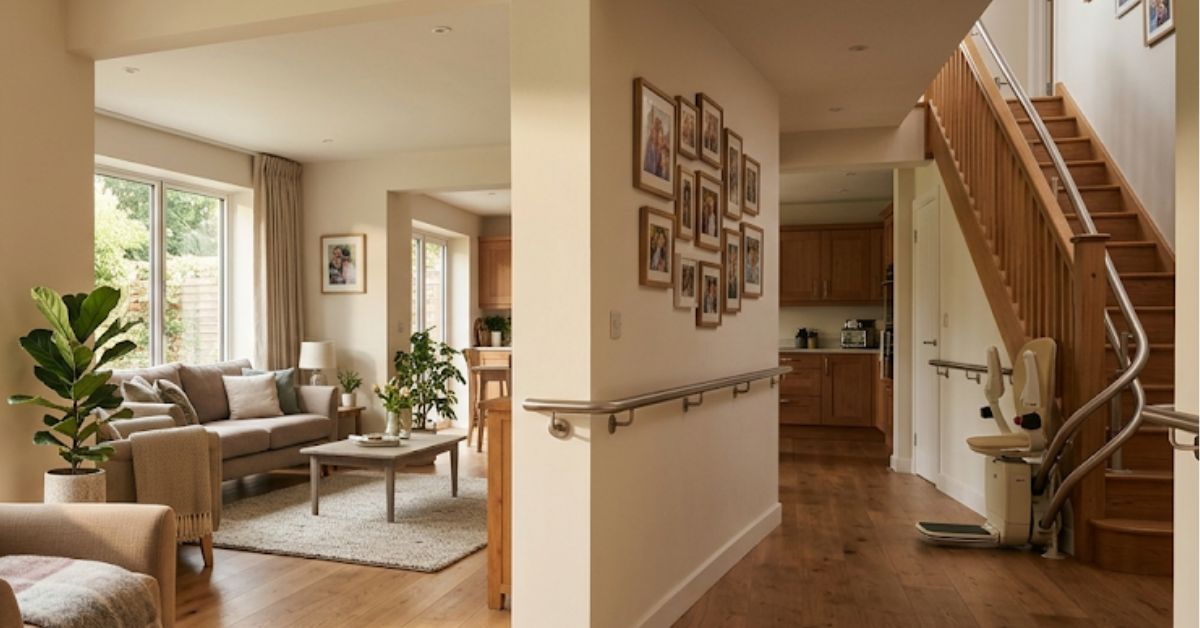
When most families think about home accessibility modifications, they think about equipment — the stair lift that lets Mom get to her bedroom, the ramp that gets Dad's wheelchair to the front door, the grab bars that make the shower safer. These are the tangible, visible changes. But the real value of accessibility modifications is not the equipment itself — it is what the equipment makes possible in the senior's daily life.
Accessibility improvements are not primarily about preventing bad outcomes (though they do prevent falls, injuries, and premature institutional placement). They are about enabling good outcomes — the moments of independence, dignity, connection, and joy that make daily life meaningful. This guide explores how accessibility modifications improve quality of life for NJ seniors across six specific dimensions, why the benefits often exceed what families expect, and why proactive modification typically delivers greater benefit than reactive.
The Real Meaning of Quality of Life for Aging Adults
Quality of life for older adults is measured across multiple dimensions — physical safety, psychological wellbeing, autonomy, social connection, cognitive engagement, and financial security. Traditional healthcare focuses primarily on the physical dimensions. Home accessibility modifications, uniquely among senior interventions, affect nearly all six dimensions simultaneously. That is why the impact of a well-designed accessibility upgrade is often larger than families anticipate.
The core insight: When a senior can safely and independently access every room of their home, use their bathroom without help, come and go from their front door, and move through daily routines with confidence, the effect on quality of life is not incremental — it is transformative. Modifications don't just remove barriers; they restore the sense of being at home in one's own life.
Benefit Category 1: Physical Safety & Injury Prevention
The most tangible benefit of home accessibility modifications is preventing falls and fall-related injuries. Falls are the leading cause of both fatal and nonfatal injuries among Americans 65 and older, and the home is the most common location for these falls. The statistics tell a stark story:
The bathroom and staircase are the two highest-risk fall locations. Grab bars, walk-in showers, non-slip flooring, and stair lifts directly address the mechanical causes of most home falls — the wet surface, the unsupported transfer, the missed step, the loss of balance during ascent or descent. Well-designed accessibility modifications don't eliminate all fall risk, but they can dramatically reduce it.
The severity of fall-related injuries in older adults matters as much as the frequency. A single serious fall — often a hip fracture, head injury, or spinal injury — can permanently change a senior's trajectory. Recovery frequently requires weeks in a hospital and rehabilitation facility, followed by months of at-home care. Many seniors who were living independently before a serious fall never return to independent living afterward. See our detailed guide: Fall Prevention for Seniors at Home.
Practical safety benefit examples
A stair lift eliminates staircase falls — historically one of the deadliest fall types for seniors. A walk-in shower with integrated grab bars eliminates the tub-wall step-over that causes so many bathroom falls. Non-slip flooring in high-risk areas addresses the slip that starts most bathroom fall sequences. Widened doorways eliminate wheelchair-related injuries from tight passages. Each modification directly addresses a specific injury mechanism.
Benefit Category 2: Psychological & Emotional Wellbeing
Beyond the physical, home accessibility modifications produce substantial psychological benefits — often the benefit seniors themselves describe first when asked about the impact. The mechanism is straightforward: worrying constantly about a fall, about needing help, or about becoming a burden creates chronic low-grade anxiety that erodes emotional wellbeing. Removing those worries returns the emotional energy they consumed.
Confidence and reduced anxiety
Many seniors experience "fear of falling" — a documented clinical phenomenon where the fear itself becomes disabling, causing seniors to restrict activity, avoid stairs, and reduce mobility even when their actual physical capability would allow more. Accessibility modifications break this cycle by making the feared activity genuinely safer, restoring both confidence and actual mobility.
Dignity in daily activities
Bathing, using the toilet, and moving through one's home are private daily activities. Needing help with these tasks — from adult children, spouses, or paid aides — is often experienced as a loss of dignity. Accessibility modifications that enable a senior to perform these activities independently preserve dignity in a way that no amount of caregiver support can replace.
Sense of home preserved
Seniors who have lived in a home for decades have emotional attachment to it — memories, familiar spaces, the neighbourhood, the community. Being forced to leave that home due to mobility challenges is a profound loss. Accessibility modifications allow the home to adapt to changing needs rather than forcing the person to abandon it.
Benefit Category 3: Independence & Autonomy
Independence is the value most consistently cited by older adults as central to their sense of wellbeing. Independence in daily activities — moving around the home, personal care, meal preparation, coming and going — is what distinguishes autonomous living from care-dependent living. Even modest accessibility improvements can preserve or restore substantial independence.
The independence gains from specific modifications are often larger than families anticipate. A single-story home with a walk-in shower and grab bars may enable a senior to remain fully independent in their personal care indefinitely. A two-story home with a stair lift and bathroom modifications may enable the same senior to remain in the home they raised their children in, rather than downsizing to a smaller ranch-style home in an unfamiliar area.
The reversal effect: accessibility modifications sometimes appear to restore lost independence. A senior who had accepted that they could no longer use the second floor sometimes rediscovers the whole home once a stair lift is installed. A person who had been avoiding the shower for months resumes daily bathing after a walk-in conversion. The modifications don't just prevent future decline — they often reverse recent adaptations to limitations.
Independence Enables Aging in Place
Aging in place — remaining in one's own home rather than moving to institutional care — is the preference of the vast majority of older adults. AARP research consistently shows that about 90% of adults 65+ want to remain in their current home as long as possible. Home accessibility modifications are one of the most effective tools for making this preference achievable.
The alternative — moving to assisted living, memory care, or a nursing home — carries substantial financial and quality-of-life costs. NJ assisted living averages $6,500–$8,500 per month. NJ nursing home care averages $12,000–$14,000 per month. A one-time accessibility investment of $10,000–$30,000 that enables 3–5 additional years of home living produces enormous financial and personal returns compared to institutional care. See our related guide: Aging in Place in New Jersey.
Benefit Category 4: Social Connection & Family Relationships
Accessibility affects a senior's ability to maintain social relationships — often in ways families don't initially recognise. When mobility challenges make it difficult to leave the home safely, social isolation follows. When entering the home is exhausting or dangerous, family and friends visit less often. When bathrooms are inaccessible, seniors avoid activities that might require them to use unfamiliar facilities.
Family visits and gatherings
Wheelchair ramps and accessible entryways make it possible for grandchildren, adult children, and visiting family to enter the home comfortably. Accessible bathrooms allow guests with mobility challenges to visit without discomfort. Home modifications turn the senior's home back into a gathering place — often restoring a role that had been quietly lost.
Community engagement
Being able to leave the home safely enables continued participation in the community — church, senior centres, medical appointments, restaurants, visits to friends. Accessibility modifications at the home entry — ramps, handrails, threshold ramps — often unlock this broader community engagement even when the senior does not have significant impairment inside the home.
Reduced burden on caregivers
Family caregivers — most often adult daughters and spouses — experience substantial stress from constant worry about a loved one's safety. Accessibility modifications reduce this stress by making the home genuinely safer. They also reduce the frequency of active caregiving tasks (helping with transfers, supervising bathing, driving to unnecessary appointments), preserving caregiver energy for the emotional and social aspects of the relationship that matter most.
Benefit Category 5: Financial Benefits
Accessibility modifications produce measurable financial benefits when compared to alternative care scenarios. Even substantial modifications cost less than a few months of institutional care.
| Scenario | Typical NJ Cost | Time Horizon |
|---|---|---|
| Comprehensive home accessibility package (stair lift + bathroom mods + entry ramp) | $10,000 – $25,000 one-time | Serves 10+ years |
| NJ assisted living facility | $6,500 – $8,500 per month | $78,000 – $102,000 per year |
| NJ nursing home care | $12,000 – $14,000 per month | $144,000 – $168,000 per year |
| Full-time in-home care aide | $25 – $35 per hour | $52,000 – $73,000 per year at 40 hrs/week |
The math is clear. Even a comprehensive $25,000 accessibility package enabling a senior to remain at home for just 6 additional months (versus assisted living) essentially pays for itself. Enabling 3 additional years of home living produces net savings of $200,000 or more compared to institutional care — plus the incalculable value of the additional home living itself.
Beyond the direct comparison, accessibility modifications may qualify for funding assistance that reduces or eliminates out-of-pocket cost. See our comprehensive guides: Free Stair Lift Options, VA Grants, NJ Medicaid Plans, and Tax Deductions for Home Accessibility.
Benefit Category 6: Cognitive & Mental Health Benefits
Accessibility modifications produce cognitive benefits that are often overlooked but well-documented in aging research. The mechanisms:
Preserved routine and familiar environment
Older adults with even mild cognitive impairment function significantly better in familiar environments than unfamiliar ones. Remaining in the long-time home preserves the environmental cues, routines, and spatial memory that support cognitive function. Moving to an unfamiliar assisted living apartment or nursing facility often accelerates cognitive decline — sometimes dramatically. Accessibility modifications that enable staying at home protect this cognitive advantage.
Preserved sense of purpose and identity
Older adults' sense of identity is deeply connected to their home, community, and daily activities. Loss of these anchors — through forced relocation to institutional care — often produces depression, apathy, and cognitive withdrawal. Accessibility modifications that preserve the senior's ability to maintain their home, hobbies, and daily routines protect against these losses.
Reduced depression and improved mood
Restricted mobility is a documented risk factor for depression in older adults. Being confined to one room or floor of a home, unable to leave for social activities, unable to safely use one's bathroom — all of these contribute to depression. Modifications that restore mobility and independence reliably improve mood, sometimes dramatically.
Why Proactive Modification Outperforms Reactive
Families often approach accessibility modifications reactively — after a fall, after a medical event, after mobility loss has become severe. Reactive modification works but consistently delivers less benefit than proactive modification. The reasons:
- Proactive modifications prevent the injuries that reactive modifications respond to. Installing bathroom safety before a fall prevents the hospitalisation, rehabilitation, and permanent function loss that would follow the fall
- Proactive users adapt more easily. Learning to use a stair lift when still generally capable is straightforward. Learning to use one after a significant medical event, when energy and adaptability are reduced, is much harder
- Proactive modification prevents secondary decline. When seniors avoid stairs due to safety concerns, their lower-body strength declines from disuse — accelerating the mobility loss they were worried about. Enabling continued stair use through a stair lift breaks this cycle
- Proactive planning enables optimal design. Reactive modification often means quick installation under stress. Proactive planning allows for better assessment, design, and integration with the home's aesthetics
- Proactive modification preserves choice. Reactive modifications are made in response to a crisis, often with reduced ability to weigh options or consider alternatives. Proactive modifications allow the senior to be fully involved in decisions about their own home and care
The right time to consider accessibility modifications is when the senior begins to notice minor limitations — not after a fall, not after a hospital stay, not after a significant decline. Warning signs include: hesitation on stairs, discomfort transferring in the bathroom, difficulty rising from chairs, near-falls without injury, or the senior themselves expressing concern. These are the moments when proactive modification delivers the greatest benefit.
Common Misconceptions About Accessibility Modifications
Several common misconceptions prevent families from making modifications that would substantially improve quality of life:
"It Will Look Institutional"
Modern accessibility products are designed for residential use with attention to aesthetics. Stair lifts have slim profiles that fold when not in use. Grab bars come in finishes matching bathroom hardware. Walk-in showers are indistinguishable from luxury bathroom designs. The "hospital look" of accessibility equipment is largely outdated.
"It Will Reduce My Home's Value"
Most accessibility modifications are removable or have neutral resale impact. Stair lifts can be uninstalled by the next owner. Grab bars, walk-in showers, and comfort-height toilets increasingly appeal to broader buyer populations as the buyer demographic ages. Some accessibility features (walk-in showers, no-step entries) may actually increase resale appeal in certain markets.
"It's Only for Very Impaired People"
Accessibility modifications benefit anyone from mildly limited to significantly impaired. A grab bar in the shower helps a fully-abled person recover from a slip. A walk-in shower serves anyone who values easier bathing. A stair lift helps anyone recovering from surgery, illness, or joint issues. The utility is much broader than commonly assumed.
"It's Too Expensive"
Modifications range widely in cost. Basic grab bars start at a few hundred dollars installed. Full stair lift installations are $2,500–$5,000. Substantial funding assistance exists — VA grants, Medicaid programs, tax deductions, LTC insurance, and PACE. Very few families ultimately pay full retail cost after exploring available funding.
Everhome Mobility provides free in-home assessments across Northern NJ — helping families understand exactly what modifications would benefit their specific situation, what they'd cost, and what funding options are available.
Request a Free Home Accessibility Assessment →Frequently Asked Questions
What are the main benefits of home accessibility modifications for seniors?
Home accessibility modifications produce benefits across six dimensions: physical safety (fall prevention and injury reduction), psychological wellbeing (reduced anxiety, preserved dignity), independence (autonomous performance of daily activities), social connection (ability to host visitors and remain engaged with community), financial (avoided cost of institutional care), and cognitive/mental health (preserved cognitive function through familiar environment, reduced depression). Most families find the combined benefit substantially exceeds what they initially expected.
Do accessibility modifications actually prevent falls?
Yes. Well-designed modifications directly address the mechanical causes of most home falls: wet bathroom surfaces (walk-in showers, non-slip flooring), unsupported transfers (grab bars), staircase falls (stair lifts and handrails), and unfamiliar height transitions (thresholds, ramps). While no modification eliminates all fall risk, appropriate modifications can dramatically reduce fall frequency and severity — the CDC and other research consistently support this.
When should someone start thinking about home accessibility?
The right time is when minor limitations first appear — hesitation on stairs, discomfort in the bathroom, difficulty rising from chairs, or the senior themselves expressing concern about safety. Proactive modification consistently delivers greater benefit than waiting for a fall or medical event to force reactive changes. Some families begin planning as early as age 55–65 as part of general aging preparation, well before any functional decline.
Do accessibility modifications reduce home value?
Most accessibility modifications have neutral or slightly positive resale impact. Stair lifts are removable. Grab bars are inexpensive to remove and replace. Walk-in showers and comfort-height toilets increasingly appeal to broader buyer populations. The perception that accessibility modifications significantly reduce home value is outdated — modern residential accessibility products are designed with aesthetics in mind and don't create the institutional look of previous generations.
How much do home accessibility modifications typically cost?
Costs vary widely by scope. Basic grab bar packages start at a few hundred dollars. Straight stair lift installations range $2,500–$5,000. Walk-in shower conversions typically run $3,000–$8,000. Comprehensive home accessibility packages combining multiple modifications range $10,000–$25,000. Substantial funding assistance exists through VA grants, Medicaid programs, Medicare Advantage supplemental benefits, tax deductions, LTC insurance, and PACE — most families qualify for at least partial coverage.
Can home modifications really help someone stay out of a nursing home?
For many seniors, yes. Falls, bathroom safety issues, and lost mobility are among the most common reasons seniors move from independent living to assisted living or nursing home care. Addressing these issues through accessibility modifications directly extends the period of independent home living for a substantial number of seniors. Combined with in-home care support when needed, comprehensive home modifications can add years to a senior's ability to age in place.