
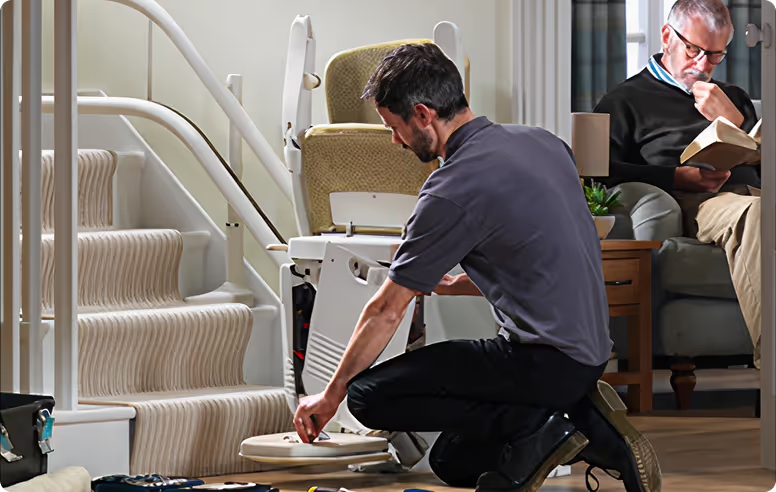
New Jersey has one of the largest and fastest-growing senior populations in the country — and one of the strongest networks of state and county programs designed to help older adults remain in their homes. But navigating those resources is not always easy. Programs are administered at the county level, eligibility rules vary, and families often do not know what is available until they are already in crisis.
This guide is a comprehensive, NJ-specific resource for families planning to age in place. It covers the home modifications that matter most, the state and county programs that can fund them, and how to connect with local experts who can help you build a plan that works for your specific situation.
What Makes Aging in Place Different in New Jersey
New Jersey presents a specific set of challenges and opportunities for aging in place that differ from national averages:
Older Housing Stock
A significant portion of NJ's residential housing was built between 1920 and 1970 — before accessibility was a design consideration. Split-level layouts, narrow staircases, raised front stoops, and small bathrooms are common in Bergen, Essex, Hudson, and Passaic County homes. This means that effective aging in place often requires more thoughtful modification planning than in newer construction markets.
High Cost of Alternatives
New Jersey assisted living costs are among the highest in the nation — averaging $4,500–$7,500 per month, with memory care facilities running $6,500–$10,000 or more. This makes the financial case for aging in place particularly compelling in NJ. A one-time investment of $5,000–$15,000 in home modifications often extends safe independent living by years — at a fraction of the ongoing cost of institutional care.
Strong State and County Support Network
New Jersey administers one of the more robust networks of senior services in the country through the Division of Aging Services and county-level Area Agencies on Aging. Understanding how to access these programs can significantly reduce the out-of-pocket cost of aging-in-place modifications.
The Most Important Home Modifications for NJ Seniors
For a full breakdown of each modification and its cost, see our guides on aging in place home safety and bathroom safety modifications. Here is a priority summary specific to NJ homes:
| Modification | Priority for NJ Homes | Typical Cost Range |
|---|---|---|
| Grab bars (toilet & shower) | ⭐ Critical — start here | $150–$400 per bar installed |
| Stair lift (multi-story homes) | ⭐ Critical for 2-story homes | $2,500–$16,000 installed |
| Wheelchair ramp or platform lift | ⭐ Critical for raised stoops | $1,500–$8,500 installed |
| Walk-in shower or tub cut-out | High — tub entry is high risk | $300–$10,000 |
| Non-slip bathroom flooring | High — wet tile is very slippery | $200–$3,500 |
| Comfort-height toilet | Medium-high | $500–$1,500 installed |
| Handheld showerhead | Medium | $50–$300 installed |
| Bedroom lighting & trip hazard removal | Medium — high night fall risk | $50–$500 |
NJ State Programs for Aging in Place
NJ Division of Aging Services (DoAS)
The NJ Division of Aging Services is the primary state agency coordinating senior services across New Jersey. It administers funding through county-level Area Agencies on Aging, oversees the Medicaid MLTSS program, and connects seniors and families with local resources. Their statewide resource helpline is 1-877-222-3737.
NJ Division of Aging Services
Statewide senior services coordination, MLTSS oversight, caregiver support programs
📞 1-877-222-3737
nj.gov/humanservices/doasNJ Medicaid MLTSS (Managed Long Term Services and Supports)
The MLTSS program is New Jersey's Medicaid-funded long-term care program designed to help eligible individuals remain in their homes rather than entering nursing facilities. For qualifying participants, MLTSS can fund:
- Home modifications including grab bars, ramps, stair lifts, and bathroom modifications
- Personal care attendant services
- Adult day services
- Home health aide services
- Medical equipment and supplies
Eligibility is based on functional need and income. Contact NJ FamilyCare at 1-800-701-0710 to begin the enrollment and assessment process.
NJ PAAD (Pharmaceutical Assistance to the Aged and Disabled)
While primarily a prescription drug assistance program, PAAD enrollment also provides access to other NJ senior benefit programs including the Senior Gold Prescription Discount Program. Eligible NJ residents 65+ or disabled individuals with income below the program thresholds should apply.
NJ HomeKeeper and Caregiver Support Programs
The NJ Division of Aging Services administers several caregiver support programs that can provide respite care, counseling, and supplemental services for family caregivers — reducing burnout and supporting the sustainability of home-based care arrangements.
County-Level Resources in North NJ
The most directly accessible resources for most NJ seniors are administered at the county level through the Area Agency on Aging network. Each county runs its own programs — eligibility, funding availability, and specific offerings vary.
Bergen County — Division of Senior Services
Bergen County Division of Senior Services
Home modification assistance, caregiver support, senior center programs, transportation
📞 201-336-7459
co.bergen.nj.us/senior-servicesEssex County — Department of Citizen Services
Essex County Department of Citizen Services — Senior Services
Home modification grants, Meals on Wheels, caregiver support, senior transportation
📞 973-395-8375
essexcountynj.org/citizen-servicesPassaic County — Division of Senior Services
Passaic County Division of Senior Services
Home modification assistance, senior nutrition, transportation, caregiver respite
📞 973-569-4060
passaiccountynj.orgHudson County — Division of Senior Services
Hudson County Division of Senior Services
Home modification grants, senior centers, caregiver support, transportation assistance
📞 201-369-4313
hcnj.us/senior-servicesFederal Programs Available to NJ Residents
VA HISA Grant
For NJ veterans, the VA Home Improvement and Structural Alterations grant is one of the most valuable funding sources available. Veterans with service-connected disabilities qualify for up to $6,800; non-service-connected conditions qualify for up to $2,000. The grant can be used for stair lifts, wheelchair ramps, grab bars, bathroom modifications, and other accessibility work.
Apply through the prosthetics or rehabilitation department at your local VA medical center. In North NJ, the primary facilities are the East Orange VA Medical Center (973-676-1000) and the Lyons VA Medical Center (908-647-0180).
USDA Section 504 Home Repair Program
For rural NJ homeowners, the USDA Section 504 program offers grants up to $10,000 for elderly, low-income homeowners to remove health and safety hazards — which can include accessibility modifications. Contact the NJ USDA Rural Development office at 856-787-7700.
Medicare Advantage Supplemental Benefits
Since 2019, Medicare Advantage plans have been permitted to offer home modification benefits as supplemental coverage. Some NJ Medicare Advantage plans include allowances of $500–$2,000+ for accessibility modifications. Call your plan's member services number and ask specifically about home modification or Special Supplemental Benefits for the Chronically Ill. For a full breakdown, see our guide: Does Medicare Cover Stair Lifts?
Non-Profit and Community Resources in NJ
Rebuilding Together
Rebuilding Together is a national non-profit with NJ chapters that provide free home repairs and modifications — including accessibility modifications — for low-income homeowners. Services are volunteer-based and subject to availability. Contact your local chapter to inquire about current programs and eligibility.
Catholic Charities of NJ
Catholic Charities operates aging-in-place support programs across several NJ counties, including case management, caregiver support, and connections to home modification resources regardless of religious affiliation.
NJ 211
Dialing 2-1-1 in New Jersey connects you to a statewide resource helpline that can direct you to local programs for senior services, home modifications, caregiver support, and more. This is often the fastest way to identify what is available in your specific community.
Start with 211: Before calling individual agencies, dial 2-1-1. NJ 211 specialists are trained to identify all available programs for your situation and county — saving you hours of research calls.
Getting a Professional CAPS Assessment in NJ
The most effective starting point for any aging-in-place plan is a professional in-home assessment by a Certified Aging-in-Place Specialist (CAPS). A CAPS assessment identifies the specific risks in your home based on the individual's current mobility, the home's layout, and likely future needs — and provides a prioritized modification plan with cost estimates.
This is different from a contractor's estimate. A CAPS professional is trained to think about the whole person — not just the physical modifications — and to recommend solutions that match the specific individual's functional needs rather than selling the most expensive option.
Everhome Mobility is CAPS-certified and provides free in-home aging-in-place assessments across North New Jersey. Our team serves Bergen County, Essex County, Passaic County, and Hudson County — with same-week availability for most assessments.
The families who navigate aging in place most successfully are those who plan ahead — who assess the home before a crisis, identify the right modifications, and apply for funding programs while there is still time to process them properly.
Building Your Aging-in-Place Plan: A Practical Checklist
Use this checklist to work through the key steps of building an aging-in-place plan for yourself or a family member in New Jersey:
- Assess current mobility and anticipated needs — consider current challenges and likely changes over the next 3–5 years
- Walk through the home with fresh eyes — identify the bathroom, staircase, and entry as the three highest-risk areas
- Schedule a CAPS assessment — get a professional, prioritized modification list
- Call NJ 211 — identify all available county and state programs for which you may qualify
- Apply for the VA HISA grant if the senior is a veteran — this can be done before any modification work begins
- Contact your county's Area Agency on Aging — ask about home modification grants and any waitlist requirements
- Check your Medicare Advantage plan if applicable — call member services about home modification benefits
- Get written quotes for all recommended modifications — compare against available funding
- Schedule modifications in priority order — start with the highest fall-risk areas (bathroom, stairs, entry)
- Review the plan annually — needs change, and the plan should keep pace
Our CAPS-certified team provides free aging-in-place assessments across North New Jersey — and can help you identify the right funding programs before any work begins.
Book Your Free Assessment →Frequently Asked Questions
What NJ state agency should I contact first about aging in place?
The NJ Division of Aging Services is the primary state agency — call their helpline at 1-877-222-3737. Alternatively, dialing 2-1-1 connects you to NJ 211, which can direct you to the most relevant local programs for your county and situation.
Does NJ have programs to help pay for home modifications?
Yes — several. NJ Medicaid MLTSS can fund home modifications for eligible participants. County Area Agencies on Aging administer home modification grants for eligible seniors. Federal programs including the VA HISA grant and USDA Section 504 are available for qualifying NJ residents. Some Medicare Advantage plans also include home modification benefits.
How do I find a CAPS-certified professional in NJ?
Everhome Mobility is CAPS-certified and serves Bergen, Essex, Passaic, and Hudson County. You can also search the National Association of Home Builders CAPS directory at nahb.org for additional certified professionals in your area.
Can I get a free home assessment for aging in place in NJ?
Yes — Everhome Mobility provides free in-home aging-in-place assessments with no obligation across North NJ. Some county aging services programs also provide free occupational therapy home assessments for eligible seniors — contact your county's Division of Senior Services to inquire.
How is aging in place different from home health care?
Aging in place refers to the overall goal of remaining in the home as needs change — which involves both physical home modifications and a support network. Home health care is one component of that support network — professional medical or personal care services provided at home. Most successful aging-in-place plans combine physical home modifications with some level of in-home support services.