
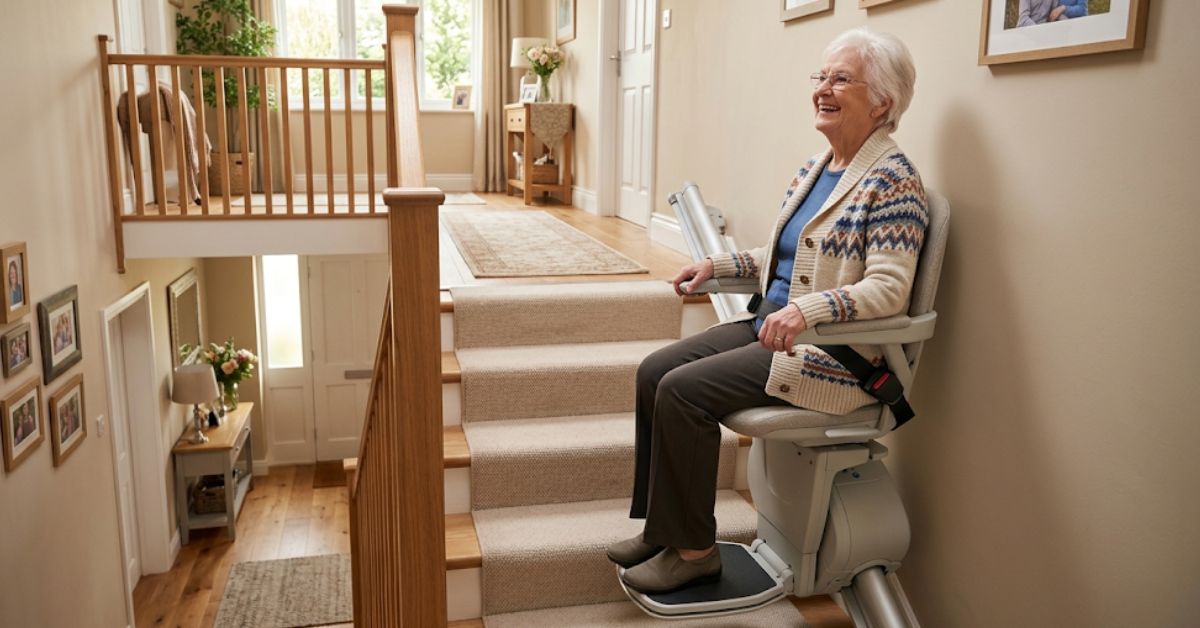
Most older adults have a clear preference about where they want to live as they age: in their own home. Not a facility. Not an assisted living community. Their own space, in their own neighbourhood, with their own routines and the independence that comes from living life on your own terms.
That preference has a name — aging in place — and it has become one of the most important concepts in senior care and home accessibility. This article explains what aging in place actually means, why it matters so deeply, what it requires to be successful, and how families across New Jersey are making it a practical reality rather than just a wish.
What Is Aging in Place?
Aging in place is defined by the Centers for Disease Control and Prevention (CDC) as "the ability to live in one's own home and community safely, independently, and comfortably, regardless of age, income, or ability level."
That definition contains three words worth unpacking: safely, independently, and comfortably. All three matter. Aging in place is not simply staying in a home at any cost — it is staying in a home in a way that supports genuine quality of life. A person who is technically still living at home but is afraid to use the stairs, avoiding the bathroom, or unable to leave the house independently is not truly aging in place in the full sense of the term.
Achieving all three — safety, independence, and comfort — is what makes aging in place a meaningful goal rather than a stubborn refusal to acknowledge changing needs. And it is what makes planning and home modification so central to the concept.
Why Do Most Seniors Want to Age in Place?
The preference for aging in place is consistent and strong across every survey of older adults. AARP research consistently finds that approximately 90% of adults over 65 want to remain in their current home as they age. Understanding why helps families support the goal rather than inadvertently working against it.
Familiarity and Comfort
A home that has been lived in for decades is deeply familiar — the layout, the light, the neighbourhood, the sounds. This familiarity is not trivial. For older adults, particularly those with any cognitive changes, familiar environments support orientation, confidence, and routine in ways that new environments cannot replicate. Moving to a new space requires relearning everything, which is cognitively and emotionally demanding.
Community and Social Connection
Long-term residents of a neighbourhood have built networks of connection — neighbours, local businesses, faith communities, friends within walking or driving distance. These social connections are profoundly important for both mental and physical health in older age. Relocating breaks those connections, and rebuilding them in a new environment is harder as mobility and social energy reduce with age.
Families who do conclude that a move makes more sense usually weigh the trade-offs carefully first — this downsizing guide from a local realtor walks through them in California-specific terms, including how Prop 19 affects the property-tax basis.
Independence and Dignity
Living in your own home means living on your own schedule, your own terms, with your own routines. Meals when you want them. Visitors when you choose. Privacy. Control over your own environment. These are not small things — they are central to dignity and wellbeing. Institutional care, however well run, necessarily compromises this autonomy in ways that matter deeply to most people.
Cost
Home modifications — even significant ones like stair lifts and bathroom conversions — are almost always substantially less expensive than the ongoing cost of assisted living or nursing home care. In New Jersey, assisted living costs average $5,000–$8,000 per month. A comprehensive set of home modifications — stair lift, bathroom conversion, ramp — might total $15,000–$30,000 as a one-time investment. The economics strongly favour home modification for most families.
Health Outcomes
Research consistently shows that older adults living in their own homes have better health outcomes than those in institutional care settings, when controlling for health status. The combination of familiar environment, maintained routines, social connection, and preserved autonomy produces measurable benefits for both physical and mental health.
What Does Aging in Place Actually Require?
Aging in place is a goal, but it is not automatic. A home that was perfectly suitable at 60 may present real challenges at 75 or 80. Successful aging in place requires three things working together: a safe home environment, adequate support systems, and appropriate health management.
A Safe and Accessible Home Environment
This is where home modification becomes central. The physical home must be adapted to support the person's current and anticipated future mobility — not just tolerated despite its hazards. The most common modifications that make aging in place genuinely viable include:
- Stair lifts for multi-level homes where stairs have become or will become difficult — the single most impactful modification for NJ homes where the bedroom is on an upper floor. See our Stair Lift Cost Guide for full details.
- Bathroom safety modifications — grab bars, walk-in shower conversions, comfort-height toilets, non-slip surfaces. The bathroom is statistically the highest fall-risk room and must be addressed proactively.
- Wheelchair ramps for homes with raised entries — particularly common in older NJ housing stock. See our Wheelchair Ramp Installation in NJ guide.
- Grab bars throughout the home — hallways, bathrooms, and anywhere a handhold improves safety and confidence.
- Lighting improvements — motion-activated nightlights, improved staircase lighting, light switches at accessible heights.
- Hazard removal — loose rugs, raised thresholds, cluttered pathways, unstable furniture used as support points.
Support Systems
Aging in place does not mean aging in isolation. Successful aging in place typically involves some combination of family support, community connections, and formal services — home care aides, meal delivery, transportation assistance, telehealth. The level of support required changes over time and should be planned for proactively rather than assembled in a crisis.
Health Management
Regular medical care, medication management, vision and hearing care, and fall prevention exercise programmes all contribute to the ability to age in place safely over the long term. Conditions that are well-managed are far less likely to produce the sudden health events that force reactive decisions about living arrangements.
Aging in Place vs the Alternatives
| Factor | Aging in Place | Assisted Living | Nursing Home |
|---|---|---|---|
| Monthly cost (NJ average) | $0–$500 ongoing after modifications | $5,000–$8,000/month | $8,000–$14,000/month |
| Independence level | High — own schedule, own home | Moderate — structured environment | Low — care-led routine |
| Familiar environment | Yes — own home | No — new setting | No — institutional setting |
| Community connections | Maintained | Disrupted then rebuilt | Largely disrupted |
| Medical support | Requires arranging separately | Available on site | Full medical care on site |
| Best suited for | Most older adults with manageable health needs | Those needing daily assistance beyond what home support provides | Those needing 24/7 skilled nursing care |
Aging in place is not the right answer for every person in every circumstance — there are situations where a higher level of care is genuinely the better option. But for the majority of older adults, a well-modified home with appropriate support is both the preferred and the most practical solution — and it deserves serious planning rather than an assumption that the default will work out.
Aging in Place in New Jersey: Specific Considerations
New Jersey presents a particular profile of aging-in-place challenges and resources that are worth understanding specifically:
Older Housing Stock
Much of NJ's residential housing was built between 1920 and 1970 — before accessibility was a design consideration. Raised stoops, narrow staircases, small bathrooms, and split-level layouts are extremely common in Bergen County, Essex County, Passaic County, and Hudson County. The modification needs are often greater than in newer construction, but the solutions are well-established — NJ-experienced providers have solved these configurations many times.
Strong Funding Ecosystem
New Jersey has one of the more comprehensive funding ecosystems for aging-in-place modifications among US states. The VA HISA grant (up to $6,800 for eligible veterans), NJ Medicaid MLTSS, county Area Agency on Aging grants, and Medicare Advantage home modification benefits all provide resources that can significantly offset modification costs. See our full guide: Medicaid & Home Modification Grants for Accessibility in NJ.
CAPS-Certified Local Providers
The CAPS (Certified Aging-in-Place Specialist) designation — awarded by the National Association of Home Builders — identifies providers specifically trained to assess and modify homes for aging-in-place needs. Working with a CAPS-certified provider ensures the assessment considers the whole person and their specific home, not just individual products. Everhome Mobility is CAPS-certified and serves all of North New Jersey.
When to Start Planning
The most common mistake families make with aging in place is waiting too long to plan. The ideal time to assess and begin modifying a home is well before any specific incident makes it urgent — typically when the first subtle signals of changing mobility appear.
See our full guide on recognising those signals: How to Know When Your Home Needs Accessibility Upgrades.
Planning ahead produces better outcomes across every dimension: better decisions, more funding options, lower stress, and a home that is ready before it needs to be rather than scrambled to be ready after a fall or hospitalisation forces the issue.
The right time to plan for aging in place is when you are thinking about it — not when you are forced to. If you are reading this article, you are already ahead of most families. Schedule a free CAPS in-home assessment while there is time to research, apply for funding, and make considered decisions.
Ready to make aging in place a reality? Our CAPS-certified team provides free in-home assessments across Bergen, Essex, Passaic, and Hudson County NJ — no cost, no obligation.
Learn About Accessibility Options →Frequently Asked Questions
What is the difference between aging in place and independent living?
Aging in place specifically refers to remaining in one's own home — not moving to any form of senior community or facility. Independent living communities are a type of senior housing where residents live in private apartments within a managed community setting. Both preserve significant independence, but aging in place is specifically about remaining in the person's own existing home rather than relocating to a purpose-built senior community.
At what age should seniors start planning for aging in place?
There is no specific age — the trigger should be the first signs of changing mobility, not a number. Many families begin planning in their early to mid-70s, but the right time depends entirely on the individual's health, mobility, and home environment. The earlier planning begins, the more options are available and the less stressful the process.
What are the most important home modifications for aging in place?
The highest-impact modifications are bathroom safety features (grab bars, walk-in shower), stair lifts for multi-level homes, entry ramps or platform lifts, improved lighting, and removal of trip hazards. The right combination depends entirely on the specific home and individual — a CAPS in-home assessment identifies the modifications with the highest impact for each specific situation.
Is aging in place possible for someone with significant mobility limitations?
Often yes — with appropriate modifications and support. A person who uses a wheelchair full-time can age in place in a suitably modified home. A person with advanced Parkinson's or post-stroke mobility limitations can age in place with the right combination of home modifications and in-home care support. The question is not whether limitations exist, but whether the home can be modified to accommodate them safely — and in most cases, it can.
How much does it cost to modify a home for aging in place in NJ?
Costs range widely depending on what is needed. Grab bar installation: $150–$800. Stair lift: $2,500–$16,000. Wheelchair ramp: $1,500–$8,500. Bathroom conversion: $3,000–$15,000. A comprehensive modification plan covering multiple areas might total $10,000–$40,000. NJ funding programs — VA HISA, Medicaid MLTSS, county grants — can offset significant portions of these costs for eligible individuals. Financing options are also available.