
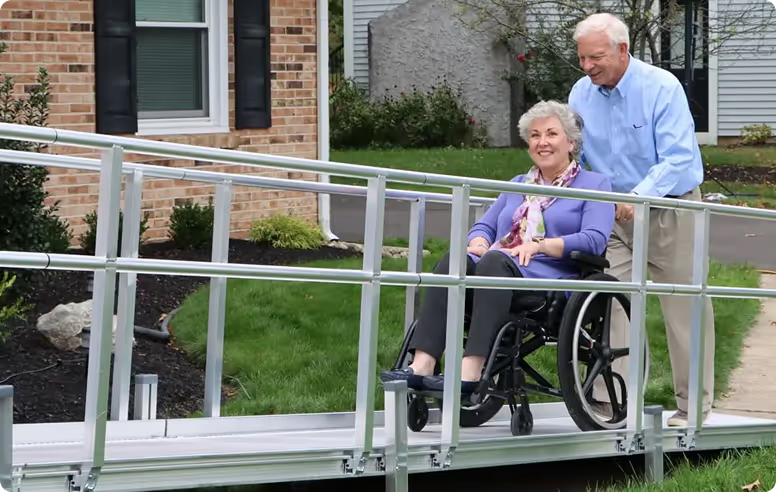
Nearly 90% of adults over 65 want to remain in their own home as they age — and it is easy to understand why. Home means independence, routine, familiar surroundings, and connection to the community built over a lifetime. Moving to assisted living or a senior facility, by contrast, often means giving up all of those things at once.
But wanting to age in place and being able to do so safely are two very different things. The average American home was not designed with aging in mind — and as mobility, strength, and balance change with age, hazards that were once invisible become real risks.
The good news is that the right home modifications can dramatically close that gap. With targeted changes to the most high-risk areas of the home, most older adults can continue living safely and independently in the place they love — often for many years longer than they would have thought possible.
This guide covers everything New Jersey families need to know about aging in place — what it means, where the real risks are, and which modifications make the biggest difference.
What Does Aging in Place Actually Mean?
Aging in place means remaining in your own home — safely, comfortably, and with as much independence as possible — as your needs change with age. It does not mean living alone without support. It means having the right combination of home modifications, assistive equipment, and care resources that allow you to continue in the home you know and love, rather than transitioning to institutional care before it is necessary.
For most families, aging in place is not a single decision but an ongoing process — a series of small adjustments that keep pace with changing needs. A grab bar here, a stair lift there, a walk-in shower conversion when the tub becomes too difficult. Done proactively and thoughtfully, these changes are barely noticeable in daily life. Done reactively — after a fall, after a hospital discharge — they can feel urgent and overwhelming.
The best time to plan aging-in-place modifications is before a crisis forces the conversation. Planning ahead gives families time to research, apply for funding, and make decisions calmly — rather than under pressure.
The Most Important Areas to Address in the Home
Not every room presents equal risk. Here is where the most significant hazards are typically found — and what to do about them:
The Bathroom
The bathroom is statistically the most dangerous room in any home for older adults. Wet surfaces, hard edges, and the physical demands of getting in and out of a tub or off a toilet create the conditions for the majority of home falls. Priority modifications include:
- Grab bars at the toilet, inside the shower, and at the tub entry — the single highest-impact, lowest-cost modification available
- Walk-in shower conversion or tub cut-out — eliminating the step-over barrier that causes many bathroom falls
- Comfort-height toilet — ADA-compliant height reduces strain when sitting and rising
- Non-slip flooring treatment — wet tile is extremely slippery; even a basic treatment dramatically improves traction
- Handheld showerhead — allows seated bathing and reduces reach and balance demands
For a full breakdown of bathroom safety modification costs, see our Bathroom Safety Modifications Cost Guide.
Stairs
For anyone living in a multi-story home, stairs are often the first mobility barrier to become genuinely dangerous. A stair lift provides safe, powered access to all floors and can extend multi-story living by years — allowing a person to remain in the home they love rather than being confined to the ground floor or having to move.
Both straight and curved stairlift options are available, and modern units are quiet, reliable, and far more compact than most people expect. An in-home assessment determines exactly which type is right for your staircase.
Home Entry and Exits
Steps at the front or rear entrance are one of the most common barriers for individuals using a wheelchair, walker, or who have significant balance challenges. A wheelchair ramp or vertical platform lift restores full, safe access and eliminates one of the most fall-prone transitions in daily life.
In New Jersey, where many older homes have raised front stoops, this is one of the most frequent modification requests we handle across Bergen County, Essex County, and Passaic County.
Bedroom
The bedroom presents its own set of risks — particularly during night-time trips to the bathroom, which account for a significant proportion of home falls. Key modifications include:
- Bed height adjustment — a bed that is too low or too high creates strain and instability when getting in and out
- Bed rails or a floor-level bed rail for support when rising
- Nightlights or motion-activated lighting along the path from bed to bathroom
- Clearing trip hazards — loose rugs, cords, and cluttered pathways
- Moving the bedroom to the ground floor if stairs are a significant concern
Kitchen
The kitchen presents challenges around reach, grip, and prolonged standing. Practical modifications include:
- Lever-style faucet handles — much easier to operate with reduced hand strength
- D-ring or loop cabinet pulls — easier to grip than traditional knobs
- Pull-out shelving in lower cabinets — reduces bending and reaching
- Anti-fatigue mats at the sink and stove — reduce discomfort from prolonged standing
- Contrasting colors at counter edges — helps with depth perception for those with vision changes
Prioritizing Modifications: Where to Start
Most families cannot — or do not need to — do everything at once. Here is a practical priority framework based on fall risk and daily impact:
| Priority | Modification | Why It Comes First |
|---|---|---|
| 1 | Grab bars at toilet and shower | Highest fall-risk points, lowest cost, immediate impact |
| 2 | Non-slip treatment on bathroom floor | Fast, inexpensive, addresses wet surface risk immediately |
| 3 | Stair lift (if multi-story home) | Stairs are the most dangerous transition in a multi-level home |
| 4 | Entry ramp or platform lift | Restores full home access; critical for wheelchair/walker users |
| 5 | Walk-in shower or tub cut-out | Eliminates tub step-over — high risk, high impact |
| 6 | Bedroom lighting and trip hazard removal | Low cost, high impact on nighttime fall risk |
| 7 | Kitchen and general accessibility upgrades | Quality of life improvements once safety priorities are addressed |
Getting a Professional Home Assessment
The most effective way to identify which modifications your home needs — and in what order — is a professional in-home assessment by a Certified Aging-in-Place Specialist (CAPS). A CAPS assessment involves a trained professional walking through every room of the home, identifying specific risk points based on the individual's current and anticipated mobility, and providing a prioritized recommendation list with cost estimates.
This is very different from a sales visit. A good CAPS assessment is honest about what is needed, realistic about budget, and focused on the individual's specific situation — not on selling the most expensive solution.
What to look for in a CAPS professional: Ask whether the company is genuinely CAPS-certified (not just claiming to be), whether the assessment includes a written report, and whether they will help you identify funding programs before recommending specific work.
When Is the Right Time to Start Planning?
The single most common regret families share with us is that they waited too long — that they began planning only after a fall, a hospitalization, or a rapid mobility decline made the situation urgent. By that point, decisions that should be made calmly and collaboratively are instead being made under pressure, often without time to apply for funding programs or research options properly.
The right time to start is before you feel you need to. Ideally, aging-in-place planning begins in a person's late 60s or early 70s, when mobility is still good and the modifications can be made thoughtfully and on budget. But it is never too late — we regularly work with families who are managing an immediate need and help them find the fastest, most practical solutions available.
Funding and Financial Assistance in New Jersey
Many NJ homeowners are surprised to learn that significant financial assistance is available for aging-in-place modifications:
VA HISA Grant
Veterans may qualify for up to $6,800 through the VA's Home Improvement and Structural Alterations grant for service-connected disabilities, or up to $2,000 for non-service-connected conditions. This can cover stair lifts, ramps, grab bars, bathroom modifications, and more.
NJ Medicaid MLTSS
New Jersey's Medicaid Managed Long Term Services and Supports program may fund home modifications for eligible participants. Medical necessity documentation is required. Contact your Medicaid case manager or NJ FamilyCare at 1-800-701-0710.
Medicare Advantage
Some Medicare Advantage plans include supplemental home modification benefits. Coverage and amounts vary by plan — call the member services number on your card and ask specifically about home modification benefits. For a full breakdown, see our guide: Does Medicare Cover Stair Lifts?
County Area Agency on Aging
Each New Jersey county administers grants and programs for senior home modifications through the Area Agency on Aging. Eligibility is typically income-based. Contact your county's office directly for current program availability.
Hearth Financing
Everhome Mobility works with Hearth financing to offer monthly payment plans from 12 to 60 months — making it possible to get critical modifications done now and pay over time.
Aging in Place vs. Assisted Living: The Financial Reality
Many families assume assisted living is the inevitable next step once mobility declines. But the financial reality often surprises people:
| Option | Typical Monthly Cost in NJ | Annual Cost |
|---|---|---|
| Assisted living facility (NJ average) | $4,500 – $7,500 | $54,000 – $90,000 |
| Memory care facility (NJ average) | $6,500 – $10,000+ | $78,000 – $120,000+ |
| Home modifications (one-time cost) | — | $3,000 – $15,000 total |
| Part-time in-home care (20 hrs/week) | $2,000 – $3,500 | $24,000 – $42,000 |
For many families, a one-time investment of $5,000–$15,000 in home modifications — combined with some level of part-time in-home support — allows a loved one to remain at home for years longer than they otherwise would, at a fraction of the ongoing cost of a facility.
Our CAPS-certified team provides free in-home aging-in-place assessments across North New Jersey — no pressure, no obligation.
Book Your Free Assessment →Frequently Asked Questions
At what age should someone start planning to age in place?
There is no single right age — it depends on the individual's health, mobility, and home layout. As a general guideline, beginning to assess and plan in the late 60s or early 70s allows modifications to be made proactively rather than reactively. That said, it is never too early or too late to start the conversation.
Can aging in place work for someone with dementia?
Aging in place with dementia is possible with the right support structure — including home modifications, in-home care, and family involvement. Specific modifications for cognitive decline include door alarms, stove safety devices, improved lighting, and simplified layouts. A CAPS assessment can help identify which changes are most relevant for the specific individual.
How do I convince a parent who refuses to make changes?
This is one of the most common challenges families face. A few approaches that tend to work: framing modifications as a way to maintain independence (not lose it), involving the parent in choosing the specific products and aesthetics, starting with small low-profile changes like grab bars, and having the conversation with a trusted physician or occupational therapist who can reinforce the recommendation from a clinical perspective.
What is a CAPS certification?
CAPS stands for Certified Aging-in-Place Specialist — a professional designation awarded by the National Association of Home Builders to individuals who have completed specialized training in home modifications for aging and disability. A CAPS-certified provider understands not just the technical requirements of accessibility modifications, but how those modifications affect daily life for the specific person using them.
How long can most people realistically age in place?
With the right modifications, support network, and ongoing care planning, many people are able to remain in their homes throughout their lives. The key variables are the nature of any health conditions, the physical layout of the home, the availability of family or professional support, and whether modifications are made proactively or reactively. There is no universal answer — but the evidence consistently shows that well-planned aging in place produces better outcomes than premature institutionalization for most individuals.