
If someone in your household is struggling to safely get in and out of the bathtub, two solutions come up most often: a walk-in tub or a tub cut-out. Both solve the same fundamental problem — the high step-over required to enter a standard tub — but they do so in very different ways, at very different price points, and with very different implications for how the bathroom functions going forward.
Choosing the wrong option means spending money on a modification that does not actually solve the problem, or making a permanent change that complicates a future bathroom renovation. This guide gives you a clear, honest comparison so you can make the right decision for your home, your budget, and the specific person who will be using it every day.
The Core Problem: Why Standard Bathtubs Are Dangerous
A standard residential bathtub requires stepping over a tub wall that is typically 14 to 18 inches high. For a younger, able-bodied person this is a trivial movement. For an older adult, anyone with reduced hip or knee mobility, or anyone with balance challenges, this step-over is one of the highest fall-risk moments in any day.
The movement requires standing on one leg while simultaneously lifting the other leg over a barrier, shifting body weight, and managing balance on a wet, often slippery surface. It is an inherently unstable sequence that has no good solution through careful behaviour alone — the physics of the movement make it dangerous regardless of how cautiously it is approached.
Both the walk-in tub and tub cut-out eliminate this step-over — just in different ways.
What Is a Tub Cut-Out?
A tub cut-out (also called a tub step or tub transfer modification) is exactly what it sounds like — a section of the tub wall is cut away and fitted with a smooth, waterproof insert, lowering the entry height from 14–18 inches to typically 3–6 inches. The user steps through the opening rather than over the full tub wall.
The modification is performed in place — the existing tub stays in the bathroom. The cut section is removed and replaced with a pre-formed, waterproof polymer insert that seals the opening completely when not in use and creates a low-threshold entry point. The process takes a few hours and requires no major plumbing or construction work.
Tub Cut-Out: Pros
- Low cost: Typically $300–$700 installed — significantly less than any alternative
- Fast installation: Completed in 2–4 hours with no plumbing disruption
- Preserves the tub: The existing bathtub remains — family members who use it for bathing can continue to do so
- Reversible: The insert can be removed and the tub restored, though a visible modification will remain
- Works with existing shower setup: If the tub has a shower, it continues to function normally
- Low disruption: No construction, no permit, no renovation timeline
Tub Cut-Out: Cons
- Still a step: A 3–6 inch threshold remains — not suitable for wheelchair users or anyone with very limited leg mobility
- Cannot fill the tub fully: The opening means the tub cannot be filled above the cut-out height — soaking baths are no longer possible
- Aesthetic impact: The modification is visible and may not suit all bathroom designs
- Not a walk-in shower solution: Does not address shower safety — grab bars and a shower seat are still needed separately
What Is a Walk-In Tub?
A walk-in tub is a purpose-built accessible bathtub with a watertight door built into the side. The user opens the door, steps through on a level or near-level threshold, closes the door, and then fills the tub — the tub must be filled after entering and drained before exiting, which is the most significant practical consideration of this option.
Walk-in tubs are typically significantly deeper than standard tubs and come with built-in seating, grab bars, non-slip flooring, and often therapeutic features like hydrotherapy jets, air jets, and heated seats.
Walk-In Tub: Pros
- Very low entry threshold: Typically 2–3 inches — much lower than even a tub cut-out
- Built-in safety features: Integrated seat, grab bars, non-slip floor, and handheld showerhead come standard
- Full soaking bath: Unlike a tub cut-out, the walk-in tub can be filled completely for a proper bath
- Therapeutic options: Hydrotherapy and air jets can be beneficial for arthritis and joint conditions
- Premium appearance: High-end models look like a luxury bathroom feature, not a medical modification
Walk-In Tub: Cons
- High cost: $3,000–$10,000+ installed — a significant investment
- Must fill after entering, drain before exiting: The user sits in the tub waiting for it to fill, then must wait for it to drain completely before opening the door to exit — this can take 10–15 minutes each way and creates a cold wait
- Full bathroom renovation: Requires removing the existing tub and plumbing modifications — multi-day project
- Permanent change: Removing a walk-in tub to restore a standard tub is expensive
- Not suitable for all users: The wait to drain before exiting can be difficult for users with incontinence or those who cannot tolerate sitting still for extended periods
Side-by-Side Comparison
| Factor | Tub Cut-Out | Walk-In Tub |
|---|---|---|
| Cost installed | $300 – $700 | $3,000 – $10,000+ |
| Installation time | 2–4 hours | 1–3 days |
| Entry threshold height | 3–6 inches | 2–3 inches |
| Full soaking bath possible | No | Yes |
| Wait to exit (drain) | No | Yes — 10–15 minutes |
| Preserves existing tub | Yes | No — tub replaced |
| Permit required in NJ | Usually no | Usually yes (plumbing) |
| Therapeutic features | No | Optional (jets, heated seat) |
| Reversible | Partially | With significant cost |
| Best for | Budget-conscious, mild-moderate mobility limitation | Those wanting a full bath, significant mobility limitation |
The Third Option Most Families Miss: Walk-In Shower Conversion
Before committing to either a tub cut-out or a walk-in tub, it is worth considering whether the right solution is actually neither — but rather a walk-in shower conversion.
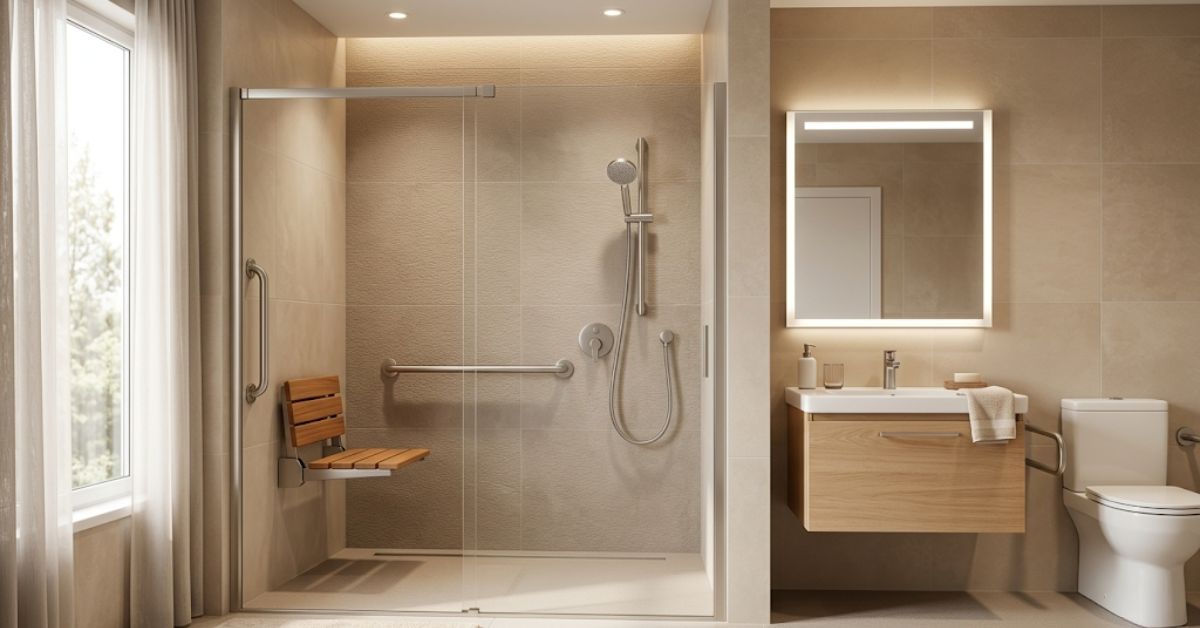
A walk-in shower conversion replaces the bathtub entirely with a barrier-free or low-threshold shower. With a fold-down shower seat, grab bars, a handheld showerhead, and a non-slip floor, a converted walk-in shower is often the safest, most practical, and most aesthetically appealing long-term solution for older adults who primarily shower rather than bathe.
| Factor | Tub Cut-Out | Walk-In Tub | Walk-In Shower Conversion |
|---|---|---|---|
| Cost installed | $300–$700 | $3,000–$10,000+ | $3,000–$12,000 |
| Entry threshold | 3–6 inches | 2–3 inches | 0–1 inch (barrier-free) |
| Bathing option | Limited | Yes | No (shower only) |
| Safest for severe mobility limitation | No | Partial | Yes |
| Wait to exit | No | Yes | No |
| Long-term practicality | Medium | Medium | High |
For a full breakdown of walk-in shower conversions and all bathroom safety modifications, see our Bathroom Safety Modifications Cost Guide.
Who Should Choose a Tub Cut-Out
A tub cut-out is the right choice when:
- Budget is the primary constraint — the modification needs to happen now and cost is a real barrier
- The mobility limitation is moderate — the person can manage a 3–6 inch step with grab bar support
- Other household members use the tub regularly and it needs to remain functional
- The modification is intended as a temporary or transitional solution while longer-term plans are developed
- Speed is essential — the modification needs to be in place within days
Who Should Choose a Walk-In Tub
A walk-in tub makes most sense when:
- The person genuinely values and will use a soaking bath — not just showering
- Hydrotherapy or warm water immersion has therapeutic value for a specific condition (arthritis, fibromyalgia, circulation issues)
- The mobility limitation is significant but the person can sit comfortably and manage the wait for draining
- Budget is not the primary constraint and a premium, permanent solution is the goal
- The bathroom is due for renovation anyway — the cost of tub removal is already being absorbed
The drain wait is the most commonly underestimated issue with walk-in tubs. Before committing to a walk-in tub, honestly assess whether the person can comfortably sit in a cooling, draining tub for 10–15 minutes before the door can be opened. For many older adults — particularly those with incontinence, poor circulation, or who get cold easily — this is a real quality-of-life issue that makes the tub impractical in daily use.
NJ-Specific Considerations
Permits
Tub cut-outs typically do not require a permit in NJ — they are a modification to an existing fixture rather than a structural or plumbing change. Walk-in tub installations almost always require a plumbing permit because they involve disconnecting and reconnecting the drain, overflow, and supply lines to fit the new unit. Check with your municipality before scheduling installation.
Older NJ Bathrooms
Many NJ homes built before 1970 have smaller bathrooms with cast iron or older steel tubs. A tub cut-out works on most tub materials. Walk-in tub installations in older NJ bathrooms may require additional work — floor reinforcement, updated plumbing supply lines, or bathroom layout adjustments — which can add to the total cost and timeline.
Funding Options
Both tub cut-outs and walk-in tub installations may qualify for funding through NJ programs — particularly the VA HISA grant (up to $6,800 for eligible veterans), NJ Medicaid MLTSS for eligible participants, and county Area Agency on Aging grants. For a full breakdown of available NJ funding, see our guide: Medicaid & Home Modification Grants for Accessibility in NJ.
Making the Decision: A Simple Framework
If you are still unsure which option is right, work through these three questions:
- Does the person primarily shower or bathe? If primarily shower — a tub cut-out (budget) or walk-in shower conversion (long-term) is almost always the better choice. Only pursue a walk-in tub if bathing is genuinely important to the person's routine.
- Can they manage a 4–6 inch step with grab bar support? If yes — a tub cut-out may be entirely adequate and saves significant cost. If no — a walk-in tub or shower conversion is needed.
- Is this a temporary fix or a long-term solution? If temporary — tub cut-out. If the goal is a permanent, high-quality accessibility solution that will serve for 10+ years — walk-in shower conversion is usually the better investment than a walk-in tub for most users.
In our experience working with NJ families across Bergen, Essex, Passaic, and Hudson County, the walk-in shower conversion — not the walk-in tub — is the modification that delivers the best long-term safety and quality of life for the vast majority of older adults. The walk-in tub is the right answer for a specific profile of user. For everyone else, a well-designed walk-in shower with proper safety features is both safer and more practical.
Not sure which option is right for your home and situation? Our CAPS-certified team will assess your bathroom and give you an honest recommendation — free, no obligation.
Book Your Free Bathroom Assessment →Frequently Asked Questions
Is a tub cut-out permanent?
The cut is permanent — a section of the tub wall is removed. However, the insert that fills the opening can be removed. The tub will retain the modification mark after removal. For most families, this is not a concern — the modification is made because the person needs it, and restoring a standard tub later would require full tub replacement.
Can you still take a bath with a tub cut-out?
Only a very shallow bath — up to the height of the cut-out opening, typically 3–6 inches. This is not a soaking bath by any standard definition. If bathing is important, a walk-in tub or a separate freestanding tub is a better solution.
How long does a walk-in tub installation take?
A walk-in tub installation typically takes 1–3 days depending on the bathroom layout, existing plumbing condition, and whether any floor reinforcement is needed. The existing tub must be removed and disposed of, the drain and supply connections reconnected, and the new unit sealed and tested before use.
Does a walk-in tub increase home value?
Generally not — and may slightly reduce it for buyers who do not need the accessibility feature. This is a practical consideration for homeowners who may sell in the near future. A well-executed walk-in shower conversion tends to be viewed more neutrally by the broader market than a walk-in tub.
What is the best bathroom modification for someone in a wheelchair?
A roll-in shower — a barrier-free shower with no threshold — is the appropriate solution for wheelchair users. Neither a walk-in tub nor a tub cut-out is suitable for wheelchair access. A roll-in shower with appropriate grab bars, a fold-down transfer seat, and a handheld showerhead provides full accessible bathing. See our bathroom safety modifications service page for more.