
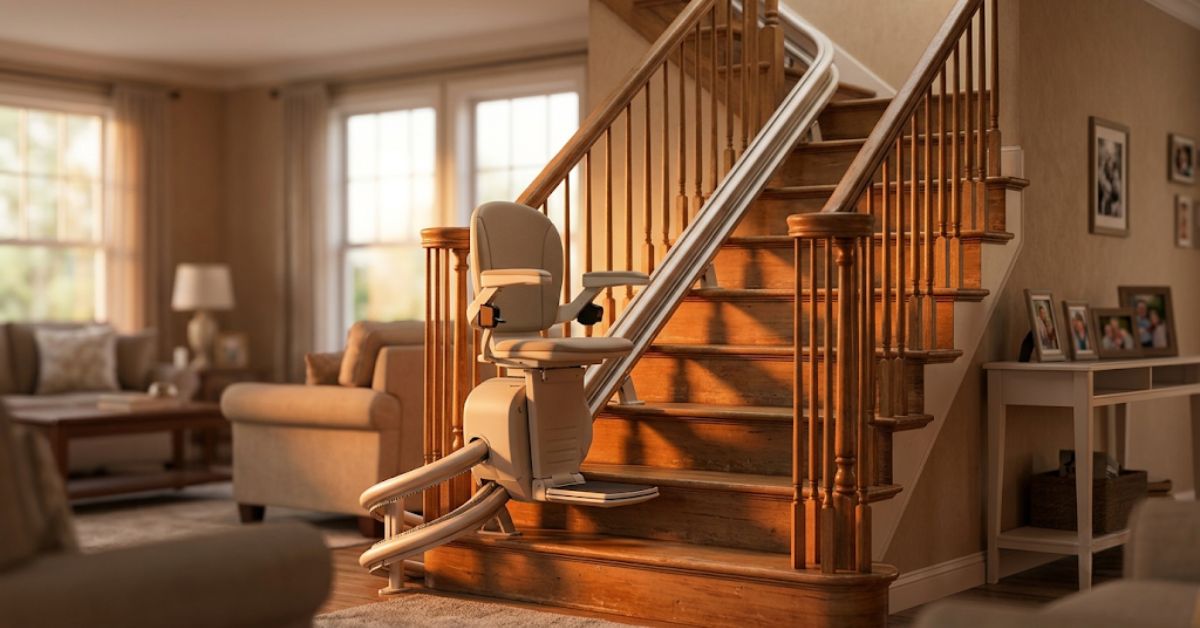
Among the funding programs available to NJ seniors for home accessibility modifications, PACE — the Program of All-Inclusive Care for the Elderly — is one of the most comprehensive yet least understood. Unlike traditional Medicare, Medicaid, or private insurance, PACE integrates every aspect of a senior's care under one umbrella, including stair lifts, wheelchair ramps, bathroom modifications, and other durable equipment needed to keep the senior safely at home.
For NJ seniors who qualify for PACE — and there are more than most families realise — home modifications typically come at no additional out-of-pocket cost, because they are part of the PACE program's comprehensive benefit package. This guide explains how PACE works, who qualifies, how home modifications specifically are handled, and how to determine whether PACE is the right funding path for your family's accessibility needs.
The Direct Answer
Yes — the PACE program covers home modifications for enrolled seniors when the interdisciplinary care team determines the modifications are necessary to keep the enrollee safely at home. Coverage includes stair lifts, wheelchair ramps, bathroom modifications, grab bars, and similar accessibility improvements. For dual-eligible enrollees (both Medicare and Medicaid), there are typically no copays or additional costs for approved modifications.
What Is the PACE Program?
PACE is a joint federal-state program administered by the Centers for Medicare & Medicaid Services (CMS) that provides comprehensive medical and social services to seniors 55 and older who would otherwise qualify for nursing home care but wish to remain at home in their communities. Unlike Medicare, Medicare Advantage, or standalone Medicaid, PACE is a single integrated program that includes:
- All primary and specialty medical care
- Prescription drug coverage
- Physical, occupational, and speech therapy
- Home care and personal care aides
- Adult day health services at PACE centres
- Transportation to medical appointments and PACE centres
- Meals and nutritional services
- Dental, vision, and hearing services
- Hospital and nursing home care when needed
- Durable medical equipment
- Home modifications for safety and accessibility
The philosophy behind PACE is that comprehensive coordinated care delivered at home is both better for the senior and less expensive for taxpayers than institutional care. Every PACE enrollee has an interdisciplinary care team — physicians, nurses, social workers, therapists, dieticians, and personal care coordinators — that meets regularly to plan and adjust the enrollee's care.
Who Qualifies for PACE?
PACE eligibility is stricter than standard Medicare or Medicaid but broader than many families expect. To enroll, a person must meet all four criteria:
1 Age 55 or older
PACE serves seniors and near-seniors — the lower age threshold is 55, which is lower than the 65 threshold for standard Medicare. This allows enrollment for younger seniors who have qualifying disabilities and are living in the community.
2 Live in a PACE service area
PACE organizations serve specific geographic areas, generally by county or region. Not all NJ counties have PACE coverage. NJ currently has PACE programs serving parts of Burlington, Camden, Gloucester, Mercer, Middlesex, Monmouth, Ocean, Somerset, and Union counties, with expansion into additional counties in progress.
3 Certified as needing nursing home level of care
A state assessment must document that the person meets the clinical criteria for nursing home admission — typically substantial functional impairment, cognitive issues, or complex medical needs. This is not just "needs some help" but a documented level requiring skilled nursing supervision.
4 Able to live safely in the community with PACE services
The PACE team must determine that with the services PACE provides, the person can safely remain at home rather than needing institutional placement. This assessment is generally optimistic — PACE was designed precisely to help people who might otherwise be institutionalised.
Common misconception: Many families assume PACE requires the enrollee to already be near nursing home admission. In practice, PACE serves seniors across a range of functional levels, from those with mild-to-moderate impairment to those with significant care needs. If you're wondering whether a family member qualifies, contacting a local PACE program for a screening call costs nothing and takes 15–20 minutes.
How PACE Handles Home Modifications
Home modifications under PACE work differently from every other funding program discussed on this blog. Because PACE is a comprehensive, capitated program (the federal and state governments pay PACE a fixed monthly amount per enrollee to cover all services), the interdisciplinary care team has both the incentive and the authority to approve modifications that keep the enrollee safely at home.
The Interdisciplinary Team Model
Every PACE enrollee's care is managed by an interdisciplinary team including a primary care physician, nurse, social worker, physical therapist, occupational therapist, dietician, home care coordinator, personal care attendant supervisor, transportation coordinator, and PACE centre manager. The team meets regularly to review each enrollee's condition, needs, and care plan.
Home modifications enter this discussion when:
- A home safety assessment identifies fall risks or access barriers
- The enrollee's condition changes (post-hospital, progressive disease, new mobility limitation)
- The occupational therapist identifies accessibility improvements that would enable more independent function
- Family members raise specific safety concerns
- The enrollee themselves requests a modification
Once identified, the team evaluates whether the modification is medically necessary to support the enrollee's safe community living. Approved modifications are then coordinated by the PACE organization — typically through their contracted installer network.
What Modifications Are Typically Approved
PACE coverage for home modifications tends to be more generous than most families expect because it is not limited by the specific caps that constrain Medicare Advantage supplemental benefits or the specific benefit categories of long-term care insurance. Common approved modifications include:
- Stair lifts — straight and curved, providing access between floors
- Wheelchair ramps — modular aluminum, permanent wood, or custom threshold ramps
- Bathroom modifications — grab bars, walk-in showers, tub cut-outs, non-slip flooring, comfort-height toilets
- Doorway widening — for wheelchair or walker access
- Handrails and railings — interior and exterior for stability
- Home safety improvements — improved lighting, non-slip flooring, threshold ramps
- Ceiling lifts — for enrollees requiring assisted transfers
- Kitchen accessibility — lowered counters, accessible controls (when medically justified)
What Modifications PACE Does Not Cover
PACE covers modifications that address specific care needs. It does not fund:
- Aesthetic upgrades to modifications (luxury tile, designer fixtures, premium finishes)
- General home improvements or repairs unrelated to accessibility
- Modifications to homes where the enrollee does not live
- Modifications made without team authorisation
- Home elevators (typically considered beyond standard accessibility)
- Modifications the enrollee could accomplish with less expensive interventions (portable equipment, home care aide support)
How PACE Costs Work
Costs to the enrollee depend on Medicare and Medicaid eligibility status:
| Enrollment Category | Enrollee Out-of-Pocket Cost | Notes |
|---|---|---|
| Dual-eligible (Medicare + Medicaid) | $0 for all services including modifications | Most common enrollee category; complete cost coverage |
| Medicare only, no Medicaid | Monthly premium for Medicaid portion (typically several thousand $/month) | Enrollee pays what Medicaid would otherwise cover |
| Private pay (no Medicare or Medicaid) | Full monthly cost (typically $5,000–$8,000/month) | Rare — most enrollees have at least Medicare |
| Medicaid only, no Medicare | $0 for services in most states including NJ | Uncommon under 65 but possible |
For the large majority of NJ PACE enrollees who are dual-eligible for both Medicare and Medicaid, there are no monthly premiums, no copays, and no additional charges for approved home modifications. This makes PACE one of the most financially favourable funding paths for eligible seniors — the modifications are simply part of the comprehensive care package they receive.
The key insight about PACE is that it is not really a "funding program" for modifications the way VA HISA or Medicaid MLTSS is. It is a total care program where modifications are one of many services provided as part of comprehensive coordinated care. Enrollees don't apply for modification funding — the care team identifies the need and arranges the installation.
How to Enroll in PACE
Enrollment is a multi-step process taking typically 4–8 weeks from initial contact to first PACE services:
Identify local PACE programs
Contact the National PACE Association (npaonline.org) or call your county Area Agency on Aging for a list of PACE programs serving your area. Not all NJ counties have PACE coverage — verify service area coverage for the senior's home address.
Initial screening call
Call the PACE organization directly. A screening coordinator will ask about the senior's age, address, medical conditions, functional abilities, current care, and insurance status. This 15–20 minute call determines whether the senior appears to meet PACE eligibility criteria and whether a formal assessment should be scheduled.
In-home assessment
A PACE team member visits the home to conduct a comprehensive assessment including medical history, functional abilities, home safety, and social supports. This visit also serves as the initial home safety assessment that will identify potential modifications the team should consider.
State nursing home level of care certification
The state Medicaid office reviews the assessment and formally certifies that the person meets nursing home level of care criteria. This certification is required for PACE enrollment. Processing typically takes 2–4 weeks.
Enrollment agreement and Medicare/Medicaid coordination
Once certified, the senior signs the PACE enrollment agreement. If already on Medicare, PACE becomes their Medicare coverage — replacing Original Medicare or Medicare Advantage. If already on Medicaid, PACE becomes the delivery mechanism for Medicaid long-term care services.
First PACE services begin
Enrollment becomes effective the first day of a month. The PACE team begins providing services immediately — including scheduling any identified home modifications, arranging transportation, coordinating with the enrollee's existing providers, and planning ongoing care.
PACE vs Other Funding Programs: Which Is Best?
Because PACE is comprehensive rather than modification-specific, comparing it to other funding programs requires thinking about total care needs, not just modification costs:
| Program | Best For | Home Modification Coverage |
|---|---|---|
| PACE | Seniors 55+ with nursing home level care needs who want comprehensive coordinated care | Full — as part of comprehensive care package |
| NJ Medicaid MLTSS | Medicaid-eligible seniors needing significant support but not full PACE integration | Full — through MCO care management |
| Medicare Advantage | Medicare enrollees wanting to stay in traditional care structure | Partial — $500–$2,500 typical supplemental benefit |
| VA HISA | Veterans with service or medical needs | Up to $6,800 (service-connected) or $2,000 (non-service-connected) |
| Long-Term Care Insurance | Policyholders meeting benefit triggers | Varies by policy — $3,000–$10,000 typical |
For a senior who is eligible for PACE, PACE is almost always the most comprehensive funding option for both home modifications and everything else. The trade-off is that PACE requires accepting the PACE structure — using their team of providers, attending the PACE centre periodically, and coordinating all care through PACE.
Trade-offs and Considerations
PACE is highly beneficial but comes with structural constraints families should understand before enrolling:
Provider Network Restrictions
PACE enrollees generally must use PACE providers for medical care. If the senior has established relationships with specific specialists outside the PACE network, transitioning to PACE means transitioning those relationships. Some PACE organizations allow limited use of outside specialists with authorisation; policies vary.
Centre Attendance
Most PACE programs require enrollees to attend the PACE centre 1–3 days per week for socialisation, health monitoring, and coordinated services. Transportation is provided. For seniors who enjoy this social model, it is a benefit; for those who prefer complete independence at home, it may feel structured.
Service Area Constraints
PACE benefits end if the enrollee moves outside the PACE service area. This affects families considering relocation. Confirm service area boundaries before enrollment if any relocation is possible.
Disenrollment Complexity
Enrollees can leave PACE at any time, but coordination with Medicare and Medicaid to restore original coverage takes time. Plan carefully before enrollment if there's meaningful uncertainty about whether PACE will be the long-term fit.
Everhome Mobility works with NJ PACE organizations on approved home modifications, providing installations coordinated through the enrollee's care team.
Request PACE-Coordinated Assessment →Frequently Asked Questions
Does PACE cover stair lifts and wheelchair ramps?
Yes. The PACE Program covers stair lifts, wheelchair ramps, bathroom modifications, and other accessibility improvements when the interdisciplinary care team determines they are necessary to support the enrollee's safe community living. For dual-eligible enrollees (both Medicare and Medicaid), these modifications typically have no out-of-pocket cost. Coverage is coordinated through the PACE organization's contracted installer network.
Who qualifies for the PACE program?
PACE eligibility requires four criteria: age 55 or older, living in a PACE service area, state certification that the person needs nursing home level of care, and the ability to live safely in the community with PACE services. Most NJ enrollees are dual-eligible for both Medicare and Medicaid, though enrollment is possible with Medicare only, private pay, or Medicaid only in some cases.
How does PACE differ from Medicare Advantage?
Medicare Advantage is a Medicare-only replacement plan that provides Medicare-covered services (typically with some supplemental benefits). PACE is a comprehensive program combining Medicare, Medicaid, and integrated care — covering not just medical services but also home care, adult day programs, transportation, meals, home modifications, and long-term care. PACE requires nursing home level of care certification; Medicare Advantage does not.
How much does the PACE program cost?
For dual-eligible enrollees (both Medicare and Medicaid), PACE has no monthly cost, no copays, and no out-of-pocket charges for services including home modifications. Medicare-only enrollees pay the Medicaid portion (typically several thousand dollars per month). Private-pay enrollees pay the full program cost (typically $5,000–$8,000 per month depending on location).
Which counties in NJ have PACE programs?
NJ currently has PACE programs serving parts of Burlington, Camden, Gloucester, Mercer, Middlesex, Monmouth, Ocean, Somerset, and Union counties, with additional counties in development. Coverage areas expand periodically. Contact the National PACE Association or your county Area Agency on Aging for current NJ program availability and service area maps.
Can I stay in PACE if I move?
PACE coverage is tied to the PACE service area. Moving outside your PACE program's service area ends your PACE enrollment. If moving within NJ to a different PACE program's service area, you can transition to the new PACE program. If moving to an area without PACE coverage, you'll need to transition to alternative Medicare/Medicaid coverage. Plan carefully before enrollment if you're considering relocation.