
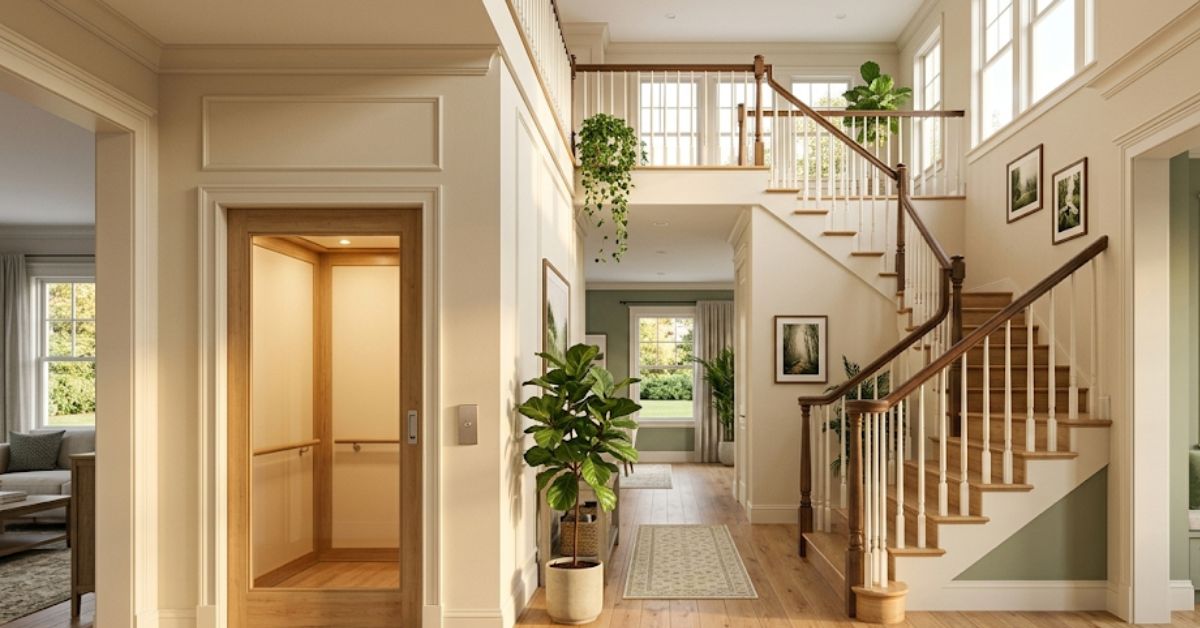
A home elevator can be a major accessibility investment, especially for families planning long-term independence in a multi-level home. But pricing is rarely simple. The final cost depends on the elevator type, number of floors, construction needs, electrical work, finishes, permits, and whether the home was originally designed with vertical access in mind.
This home elevator cost guide is written for New Jersey families comparing long-term accessibility options. It explains the main cost drivers, when a residential elevator may make sense, and when a simpler solution such as a stair lift, wheelchair ramp, or targeted bathroom safety upgrade may be the more practical first step.
Home Elevator Cost: Why the Range Is So Wide
Home elevator pricing varies because every house is different: one home may already have space for a shaft, while another may require major framing, electrical, flooring, and finish work. That is why two homes with the same elevator model can have very different final project costs.
The elevator equipment is only one part of the budget. Families also need to consider construction preparation, code requirements, electrical work, inspections, interior finishes, door placement, and the disruption created during installation.
Common Home Elevator Types
| Type | Best Fit | Cost Consideration |
|---|---|---|
| Hydraulic elevator | Long-term residential use with smooth ride quality | Often higher equipment and installation cost because of mechanical requirements |
| Traction elevator | Homes where machine-room-less options may be preferred | Pricing depends heavily on shaft design and equipment specifications |
| Pneumatic vacuum elevator | Some retrofit situations with limited construction space | May reduce shaft work but can have size and capacity limitations |
| Shaftless or through-floor lift | Specific two-floor access needs | May be less invasive than a full elevator but still needs careful layout review |
| Platform lift | Short vertical travel or wheelchair access in certain layouts | Often used for limited-rise access rather than full-home vertical travel |
The right choice depends on the person’s mobility needs, whether wheelchair access is required, the home’s structure, available space, and long-term plans for aging in place.
Main Installation Factors That Affect Pricing
Home Layout and Shaft Location
The biggest question is where the elevator can go. A stacked closet, open corner, garage area, or planned addition may reduce construction complexity. If no clear vertical path exists, costs rise because framing and floor openings become more involved.
Number of Stops
A two-stop elevator is simpler than a three-stop elevator. Each additional stop can add cost because it requires additional doors, controls, landing work, safety components, and inspection requirements.
Electrical and Mechanical Requirements
Some systems need dedicated circuits, backup power considerations, control wiring, or mechanical space. Electrical upgrades can become a meaningful part of the total project.
Construction and Finish Work
Walls, flooring, trim, doors, paint, and landing areas all affect the final budget. Families should ask whether the quote includes finish restoration or only the elevator equipment and core installation.
Home Elevator vs. Stair Lift
For many families, the most important decision is not which elevator to buy. It is whether a home elevator is necessary at all. If the main safety challenge is moving between floors, and the person can safely transfer into a seated lift, a stair lift may solve the problem with far less construction and disruption.
| Question | Stair Lift May Fit | Elevator May Fit |
|---|---|---|
| Does the person use a wheelchair full time? | Only if transfers are safe | Often better for full wheelchair access |
| Is construction disruption a concern? | Usually less disruptive | Often more construction intensive |
| Is the need urgent? | Can often be installed faster | Usually requires more planning |
| Is the goal long-term full-floor access? | Good for stair travel | Better for broader floor-to-floor access |
Planning tip: Before committing to a home elevator, compare it against a stair lift, main-floor bedroom setup, bathroom safety upgrades, and entry access improvements. The best solution is the one that matches the person’s daily routine, not just the largest project.
Other Accessibility Costs to Consider
A home elevator does not automatically make the whole home accessible. Families may still need safer bathrooms, entry access, bedroom changes, and clear pathways. For a broader safety plan, see How to Make a Home More Accessible Without Major Remodeling and Home Safety Guide for Seniors Living Alone.
Grab bars, shower seating, and safer transfers
Vertical access helps people move between floors, but bathroom safety is often where daily fall risk remains highest.
Ramps, handrails, and threshold transitions
If a person cannot safely enter the home, an elevator alone will not solve the full accessibility problem.
Stairlift planning and safer stair use
A stair lift can sometimes meet the same daily need with less disruption than a residential elevator.
Questions to Ask Before Requesting Quotes
- What daily problem are we trying to solve? Stairs, wheelchair access, caregiver support, or future aging-in-place planning?
- Is wheelchair access needed now or later? This changes the type of solution to consider.
- Can the home support a shaft or lift path? Layout and structure matter before pricing can be accurate.
- Will bathroom and entry access still be unsafe? A full accessibility plan should look beyond floor-to-floor movement.
- Is there a faster or less disruptive alternative? Stair lifts, ramps, and small-change upgrades may solve the immediate need.
The right accessibility investment is not always the biggest one. It is the improvement that restores safe daily movement, reduces fall risk, and supports independence with the least unnecessary disruption.
When to Schedule a Home Accessibility Assessment
Consider an assessment before choosing a home elevator if someone has recently fallen, is avoiding stairs, uses a walker or wheelchair, is preparing for surgery recovery, or wants to stay in a multi-level home long term. A professional review can clarify whether a stair lift, ramp, bathroom modification, or larger renovation path makes the most sense.
Everhome Mobility helps Northern New Jersey families evaluate practical accessibility options, including stairlifts, wheelchair ramps, bathroom safety modifications, and home safety improvements.
Request a Free Accessibility Assessment →Frequently Asked Questions
How much does a home elevator typically cost?
A residential home elevator often represents a major investment because the total cost depends on elevator type, number of stops, structural work, electrical requirements, finishes, permits, and whether the home was originally designed for an elevator shaft.
What factors affect home elevator pricing the most?
The biggest cost factors are the type of elevator, how many floors it serves, whether a hoistway or shaft must be built, site conditions, electrical work, door placement, finish level, and local permit or inspection requirements.
Is a stair lift less expensive than a home elevator?
In many homes, a stair lift is significantly less expensive and less disruptive than a home elevator. A stair lift may be appropriate when the main challenge is safely moving between floors and the staircase can support a lift.
When is a home elevator worth considering?
A home elevator may be worth considering when wheelchair access between floors is needed, multiple household members need vertical access, the home is being substantially renovated, or long-term aging-in-place planning requires full-floor access.
Should I get an accessibility assessment before choosing a home elevator?
Yes. An assessment can help determine whether a home elevator, stair lift, ramp, bathroom modification, or a combination of improvements best matches the person’s mobility needs and the home’s layout.
Does Everhome Mobility install home elevators?
This guide is educational and does not claim home elevator installation as an Everhome Mobility service. Everhome Mobility helps Northern New Jersey families evaluate practical accessibility options such as stairlifts, wheelchair ramps, bathroom safety modifications, and home safety improvements.