
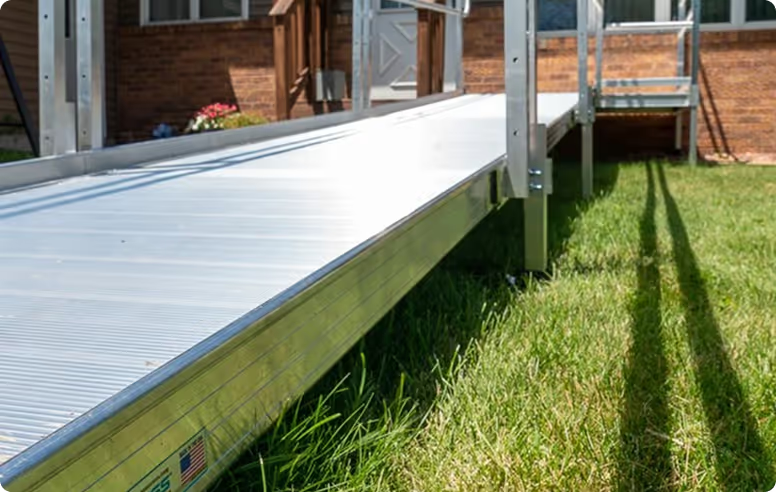
If someone in your household uses a wheelchair, walker, or has significant mobility challenges, a wheelchair ramp is often not a luxury — it is the difference between being able to safely enter and exit the home and being effectively confined. That makes the question of whether insurance will help cover the cost one of the first things families ask.
The short answer is that standard Medicare does not cover wheelchair ramps — but several other programs do, and NJ homeowners have more options than most people realise. This guide breaks down every coverage avenue available, what documentation you need, and what to do when coverage falls short.
Quick Reference: Coverage Summary
| Program / Insurance Type | Covers Wheelchair Ramps? | Notes |
|---|---|---|
| Medicare Parts A & B | ❌ No | Classified as home modification, not DME |
| Medicare Advantage (Part C) | ⚠️ Sometimes | Some plans include home modification benefits |
| NJ Medicaid MLTSS | ⚠️ Sometimes | Eligible participants with documented medical need |
| Long-term care insurance | ✅ Often yes | Home modification benefits in most LTC policies |
| VA HISA Grant | ✅ Yes | Up to $6,800 for eligible veterans |
| Private health insurance | ❌ Usually no | Same classification issue as Medicare |
| USDA Section 504 | ✅ Yes (rural NJ) | Up to $10,000 for eligible rural homeowners |
| County AAA grants | ✅ Often yes | Income-based grants through NJ county programs |
| Workers' compensation | ⚠️ Sometimes | If disability resulted from workplace injury |
Why Standard Medicare Does Not Cover Wheelchair Ramps
Medicare Part B covers Durable Medical Equipment — items that are medically necessary, prescribed by a physician, and used directly for medical treatment in the home. Wheelchairs, walkers, and hospital beds qualify as DME. Wheelchair ramps do not.
Medicare classifies ramps as home modifications — structural changes to the property — rather than medical devices. This classification holds regardless of how essential the ramp is to the individual's daily function, and regardless of whether a physician has recommended it. The determination is categorical, not clinical.
The same logic applies to grab bars, bathroom modifications, stair lifts, and widened doorways. None of these are covered by standard Medicare Parts A or B, for the same reason.
Common misconception: Many families believe that a physician's prescription or letter of medical necessity will prompt Medicare to cover a ramp. It will not change Medicare's coverage decision — but it is essential documentation for every other program that can help.
Medicare Advantage (Part C): Check Your Specific Plan
Medicare Advantage plans are sold by private insurers and can offer benefits beyond standard Medicare. Since 2019, CMS has permitted Advantage plans to offer Special Supplemental Benefits for the Chronically Ill, which can include home modification benefits — wheelchair ramps included.
Coverage is plan-specific and not guaranteed. Here is how to find out if your plan covers a wheelchair ramp:
- Call the member services number on the back of your Medicare Advantage card
- Ask: "Does my plan include a home modification benefit or accessibility equipment benefit?"
- If yes, ask: "Does this benefit cover wheelchair ramps, and what is the coverage limit?"
- Ask about pre-authorization requirements and whether plan-approved vendors are required
- Get all details in writing before scheduling any installation
Check annually: Medicare Advantage plans revise their supplemental benefits each year. A plan that did not cover home modifications last year may offer this benefit now. Review during open enrollment (October 15 – December 7) each year.
Long-Term Care Insurance: The Strongest Private Coverage Option
If you or a family member holds a long-term care insurance policy, this is the most likely source of private coverage for a wheelchair ramp. Most LTC policies include a home modification benefit — a lump-sum or annual allowance for modifications that support the policyholder remaining at home rather than entering a facility.
What LTC Policies Typically Include
- Wheelchair ramps and entry modifications
- Stair lifts and vertical platform lifts
- Grab bars and bathroom safety modifications
- Widened doorways for wheelchair access
- Non-slip flooring and threshold modifications
Making a Claim
- Review your LTC policy for the home modification or home care benefit section
- Call your insurer's claims department and ask specifically about ramp coverage
- Obtain a letter of medical necessity from your physician
- Get a written all-inclusive quote — Everhome Mobility provides all required documentation
- Submit per your insurer's claim process and keep copies of everything
The home modification benefit in a long-term care policy can cover the full cost of a residential wheelchair ramp in many cases. It is the first place to look if an LTC policy exists — and many families do not realise this benefit is available until they ask.
VA HISA Grant: Essential for Veterans
New Jersey has a large veteran population, and the VA's Home Improvement and Structural Alterations grant is one of the most valuable funding tools available for wheelchair ramp installation.
| HISA Grant Type | Maximum Benefit | Eligibility |
|---|---|---|
| Service-connected disability | $6,800 lifetime | Veterans with service-connected condition affecting mobility |
| Non-service-connected | $2,000 lifetime | Veterans receiving VA care for any condition |
For a standard modular aluminum ramp, the HISA grant can cover a significant portion or the full cost depending on the configuration required. Everhome Mobility works directly with veterans through the HISA process and provides all required quotes and documentation in the format required by your local VA medical center.
How to Apply for the VA HISA Grant
- Obtain a prescription or letter of medical necessity from your VA physician
- Get a written installation quote from a licensed contractor
- Submit VA Form 10-0103 to your VA medical center's prosthetics or rehabilitation department
- Await approval — typically 2–8 weeks
- Schedule installation after approval is received
NJ Medicaid MLTSS
New Jersey's Medicaid Managed Long Term Services and Supports program can fund wheelchair ramp installation for eligible Medicaid participants who need home modifications to remain safely at home. The modification must be deemed medically necessary and approved by your MLTSS managed care organization before purchase.
Contact your MLTSS managed care organization directly, or call NJ FamilyCare at 1-800-701-0710 to begin an inquiry. For a full breakdown of NJ Medicaid aging-in-place resources, see our guide: Aging in Place in New Jersey: Resources, Modifications & Local Help.
County Area Agency on Aging Grants
Each NJ county administers home modification grants for eligible seniors through the local Area Agency on Aging. These programs are typically income-based and prioritize homeowners at risk of institutionalization without the modification. Current program availability and funding levels vary — contact your county directly:
- Bergen County Division of Senior Services: 201-336-7459
- Essex County Department of Citizen Services: 973-395-8375
- Passaic County Division of Senior Services: 973-569-4060
- Hudson County Division of Senior Services: 201-369-4313
USDA Section 504: For Rural NJ Homeowners
The USDA Section 504 Home Repair Program offers grants of up to $10,000 for elderly, low-income homeowners in rural areas to remove health and safety hazards — including accessibility barriers. For qualifying rural NJ homeowners, this can cover the full cost of a standard wheelchair ramp installation.
Contact the NJ USDA Rural Development office at 856-787-7700 to determine whether your property qualifies and to begin an application.
Workers' Compensation
If a mobility impairment resulted directly from a workplace injury, workers' compensation may cover home modifications including wheelchair ramp installation as part of the rehabilitation and accommodation process. This is fact-specific and insurer-dependent — consult a workers' compensation attorney if you believe this may apply to your situation.
What to Do When Insurance Doesn't Cover It
If coverage is unavailable or insufficient, several practical alternatives make a wheelchair ramp financially accessible for NJ homeowners:
Hearth Financing
Everhome Mobility offers monthly payment plans through Hearth — 12 to 60 months at competitive rates. A $3,500 modular ramp over 24 months is approximately $146/month. Applications take minutes and approval is typically immediate.
NJ 211
Dialing 2-1-1 in New Jersey connects you to a resource helpline that can identify all available local programs for your specific situation and county — often finding options families were not aware of.
Federal Tax Deduction
Wheelchair ramp installations may qualify as a deductible medical expense on your federal tax return if total qualifying medical expenses exceed 7.5% of your adjusted gross income and the modification is made primarily for medical reasons. Consult a qualified tax professional before claiming this deduction.
Rebuilding Together NJ
Rebuilding Together is a national non-profit with NJ chapters that provides free home repairs and accessibility modifications for low-income homeowners. Availability is volunteer-based and subject to current program capacity — contact your local chapter to inquire.
Our team can help identify the right funding programs for your situation during your free in-home assessment — no obligation, no pressure.
Book Your Free Ramp Assessment →Documentation You Will Need for Any Program
Regardless of which program or insurance type you pursue, having the right documentation in order before you apply significantly speeds up the process and improves approval rates. Prepare the following:
- Letter of medical necessity — from your physician, documenting the specific condition, how it affects mobility and home access, and why a wheelchair ramp is medically required
- Written installation quote — all-inclusive, from a licensed and insured contractor. Everhome Mobility provides these in the format required by most programs
- Photos of the entrance — showing the steps, threshold height, and available space. Some programs require these as part of the application
- Proof of homeownership — required by most grant programs
- Income documentation — required for income-based grants (county AAA, USDA)
Frequently Asked Questions
Does Medicare cover wheelchair ramps?
No. Standard Medicare Parts A and B do not cover wheelchair ramps. Medicare classifies ramps as home modifications rather than durable medical equipment, so they fall outside standard Medicare coverage regardless of medical necessity or physician documentation.
Does Medicaid cover wheelchair ramps in NJ?
NJ Medicaid MLTSS may cover wheelchair ramp installation for eligible participants who need home modifications to remain safely at home. Medical necessity documentation and pre-approval from your managed care organization are required. Call NJ FamilyCare at 1-800-701-0710 to inquire.
What is the VA HISA grant and how much does it cover for ramps?
The VA Home Improvement and Structural Alterations grant provides up to $6,800 for veterans with service-connected disabilities and up to $2,000 for non-service-connected conditions. This can cover a standard modular aluminum ramp partially or in full depending on the configuration required. Apply through your VA medical center's prosthetics department.
Does long-term care insurance cover wheelchair ramps?
Many LTC policies include a home modification benefit that covers wheelchair ramps. Coverage amounts and claim processes vary by policy. Review your policy documents and call your insurer's claims department to confirm whether this benefit applies to your specific plan.
What documentation do I need to apply for ramp funding?
Most programs require a letter of medical necessity from your physician, a written installation quote from a licensed contractor, proof of homeownership, and (for income-based grants) financial documentation. Having these prepared before applying speeds up the process significantly.
How long does it take to get a wheelchair ramp approved and installed?
The installation itself typically takes one day once approved. The approval timeline depends on the program — VA HISA takes 2–8 weeks, Medicaid pre-authorization varies by managed care organization, and county grants depend on current program capacity. For urgent situations, Everhome Mobility can often install while funding applications are pending, with reimbursement processed afterward.