
When researching wheelchair ramps for a home, one of the first decisions you will face is material — aluminum or wood. Both can be built to ADA-compliant specifications. Both can handle the job. But they differ substantially in cost, lifespan, maintenance, weather performance, and long-term value — and in New Jersey's climate specifically, those differences matter more than in most other states.
This guide gives you a thorough, honest comparison so you can make a confident decision before spending a dollar. We cover every dimension that matters — durability, safety, cost over time, permit requirements, and which type of household benefits most from each option.
The Short Answer
For the vast majority of NJ homeowners, modular aluminum is the better choice. It costs less over time, requires no maintenance, handles NJ winters without deterioration, can be removed or reconfigured, and does not require a permit in most municipalities. Wood ramps have a narrower use case — primarily when appearance is a top priority and the homeowner is committed to the ongoing maintenance they require.
That said, the right answer depends on your specific situation. Read on for the full comparison.
Material Overview
Modular Aluminum Ramps
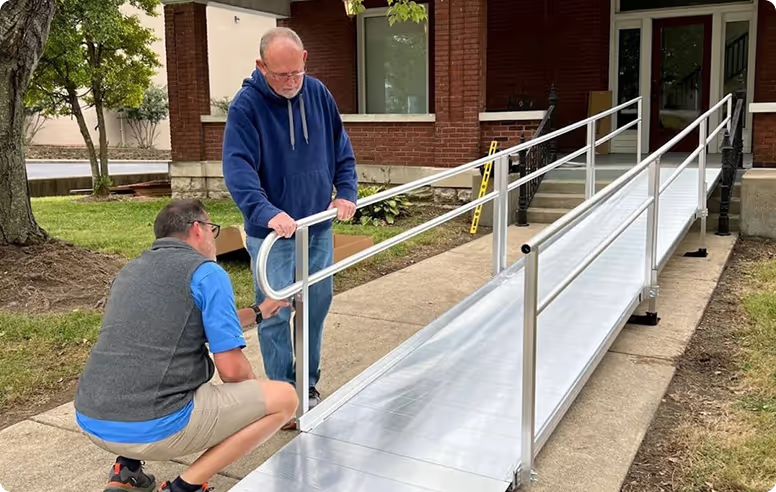
Modular aluminum ramps are assembled from pre-fabricated sections of aluminium alloy that bolt together on-site. The deck surface is typically an open grating design — either a mesh or channel pattern — that allows water, snow, and debris to fall through rather than accumulating on the surface. Rails, posts, and landings are all aluminum alloy.
The modular design means the ramp can be assembled in almost any configuration — straight, L-shaped, or switchback — and can be extended, shortened, or disassembled entirely as needs change.
Wood Ramps
Wood ramps are custom-built on-site using pressure-treated lumber for the frame and either pressure-treated decking, composite decking, or plywood with anti-slip surfacing for the walking surface. They are fixed structures that must be built to fit the specific entrance and cannot easily be moved or reconfigured.
Wood ramps require a solid foundation — typically concrete footings — and are permanently attached to the structure. They are subject to building permit requirements in most NJ municipalities.
Head-to-Head Comparison
| Factor | Modular Aluminum | Wood |
|---|---|---|
| Initial cost | $1,500 – $8,500 | $2,000 – $7,000 |
| Lifespan | 20+ years | 5–10 years |
| Annual maintenance cost | $0 – minimal | $100–$400 (sealing, painting, repair) |
| 10-year total cost estimate | $2,000 – $9,000 | $3,000 – $11,000+ |
| Permit required (NJ) | Usually no | Usually yes |
| Installation time | 1 day | 2–5 days |
| Removable / relocatable | Yes | No |
| Winter performance (NJ) | Excellent | Fair — requires maintenance |
| Wet surface traction | Excellent (open grating) | Good with treatment, poor without |
| Aesthetic flexibility | Limited — industrial look | High — can match home exterior |
| Weight capacity | 800 lbs+ (commercial grade) | Varies by construction |
| HOA acceptance | High (temporary classification) | Variable — treated as permanent structure |
Durability and Lifespan
Aluminum: Built for Decades
Aluminum alloy does not rust, rot, warp, splinter, or corrode. A quality modular aluminum ramp installed correctly will look and perform the same in year fifteen as it did in year one. The open grating deck surface does not hold water and does not develop the surface deterioration that affects solid deck materials over time.
The only maintenance aluminum requires is an occasional check of bolt connections — which can loosen slightly over time through thermal expansion and contraction — and cleaning of the charging contacts if the ramp runs near any electrical equipment. Neither of these is significant.
Wood: A 5–10 Year Material in NJ's Climate
Wood ramps in New Jersey face a challenging environment. The freeze-thaw cycle that repeats throughout winter causes wood to expand and contract repeatedly, opening grain and accelerating water penetration. Wet springs and humid summers promote mildew and wood rot, particularly in areas where water pools on the surface or where the structure meets the ground.
Pressure-treated lumber resists rot better than untreated wood, but it still requires annual sealing and inspection — and it still deteriorates. A wood ramp that is not sealed annually will show significant degradation within 3–5 years in NJ. Even a well-maintained wood ramp typically requires replacement or major repair within 10 years.
True cost of wood over 10 years: A $4,000 wood ramp that requires $200/year in maintenance and replacement after 8 years actually costs $5,600+ over that period — more than a modular aluminum ramp that requires essentially no maintenance and lasts twice as long.
Safety and Traction
Aluminum: Traction by Design
Open-grate aluminum decking provides excellent traction in all weather conditions. The grating pattern creates constant texture underfoot regardless of whether the surface is wet, icy, or covered in light snow. Water and snow fall through the deck rather than pooling on the surface, which significantly reduces ice formation compared to solid-deck alternatives.
In NJ winters, this is a meaningful safety advantage. A ramp that drains through the deck surface is substantially safer in icy conditions than one that retains water and freezes solid.
Wood: Traction Depends on Treatment
Bare wood decking becomes extremely slippery when wet — similar to wet hardwood flooring. Properly treated wood ramps — those with anti-slip strips, non-slip paint, or textured composite decking — perform well in dry conditions and adequately in wet conditions. However, treatment wears off over time and must be reapplied regularly.
A wood ramp that has not been recently treated is a genuine safety hazard in wet or icy conditions. This maintenance dependency is a real concern for families where the person using the ramp is dependent on it for safe home access every day.
Permits in New Jersey
This is one of the clearest practical differences between the two materials for NJ homeowners:
- Modular aluminum: Classified as a temporary structure in most NJ municipalities — does not require a building permit in the majority of towns. Always confirm with your specific municipality, but permit-free installation is the norm for modular systems.
- Wood: Classified as a permanent structure in most NJ municipalities — requires a building permit, which involves plan submission, review, and inspection. This adds cost, time, and administrative work to the project. In some municipalities, a wood ramp may also require zoning approval depending on setback requirements.
For homeowners who need a ramp quickly — after a hospital discharge, during an urgent mobility decline — the permit timeline for a wood ramp can be a significant obstacle. Modular aluminum can typically be installed within 24–48 hours of the assessment.
HOA Considerations
Many NJ homeowners in planned communities, condominiums, and townhouse developments face HOA restrictions on exterior modifications. The material choice matters here:
- Modular aluminum is classified as temporary and non-structural in most HOA contexts — it does not alter the building's structure and can be removed without leaving a mark. HOAs are significantly more likely to approve modular aluminum ramps than permanent structures.
- Wood ramps are treated as permanent exterior modifications by most HOAs — subject to the same review process as decks, fences, and other structural additions. Approval is less certain and may come with aesthetic conditions.
Aesthetics: The One Advantage of Wood
This is where wood has a genuine edge. A well-built wood ramp — painted or stained to match the home exterior, with decorative railings that complement the architecture — can look like a natural extension of the home rather than an accessibility modification bolted on as an afterthought.
Modular aluminum ramps have an unmistakably functional appearance. The grating, the bolt connections, the industrial rail profile — they are clearly a ramp, and they do not blend with traditional home architecture the way a custom wood structure can.
For some homeowners, particularly those with visible front entrances in established neighbourhoods, this matters. For most homeowners, the practical advantages of aluminum outweigh the aesthetic advantage of wood — but it is a real factor worth acknowledging honestly.
In fifteen years of installing ramps across Bergen, Essex, Passaic, and Hudson County, we have seen dozens of wood ramps deteriorate and require replacement. We have never seen a properly installed modular aluminum ramp fail structurally. The maintenance burden of wood is consistently underestimated at purchase time.
When to Choose Aluminum
- The ramp is needed quickly — same-week installation is required
- Budget is a consideration — lower maintenance costs over time
- The need may be temporary — post-surgery recovery, rental property, anticipated relocation
- The property is in an HOA community
- NJ winter performance is a priority — the person using the ramp must access it safely in all weather
- A permit cannot be obtained quickly — modular systems avoid the permit process in most NJ towns
- Flexibility for future reconfiguration is valuable
When to Consider Wood
- Aesthetics are a top priority and the homeowner is committed to regular maintenance
- A large, complex ramp structure is needed where custom carpentry is the only practical solution
- The ramp will be integrated into a broader home renovation or deck project
- The homeowner has specific HOA requirements around materials or appearance that aluminum cannot meet
- A permanent, deeply integrated structure is the stated goal and the budget includes ongoing maintenance costs
The Third Option: Composite Decking on Aluminum Frames
Some NJ homeowners choose a hybrid approach — an aluminum frame system with composite decking (like Trex) on the walking surface rather than open grating. This provides:
- The structural longevity of aluminum
- A solid, smooth walking surface that some users prefer over grating
- Better aesthetics than standard open-grate aluminum
- More maintenance than pure aluminum, but far less than wood
This is a good middle-ground option for homeowners where aesthetics matter but a pure wood ramp's maintenance burden is not acceptable. Ask about composite deck options during your free assessment.
Free same-day in-home ramp assessments across North New Jersey — we will recommend the right material for your home, budget, and specific situation.
Request Your Free Ramp Assessment →Frequently Asked Questions
Which is cheaper — aluminum or wood wheelchair ramps?
The initial cost is comparable — modular aluminum typically runs $1,500–$8,500 installed and wood runs $2,000–$7,000. However, over 10 years, aluminum is significantly cheaper when maintenance costs and earlier wood replacement are factored in. For most NJ homeowners, aluminum has lower total cost of ownership.
How long does a wood wheelchair ramp last in New Jersey?
A properly maintained wood ramp in NJ typically lasts 5–10 years before requiring significant repair or replacement. NJ's freeze-thaw cycle, wet springs, and humid summers accelerate wood deterioration. Without annual sealing and maintenance, the effective lifespan is shorter.
Do aluminum wheelchair ramps get slippery in rain or snow?
Open-grate aluminum ramps drain water and snow through the deck surface, which significantly reduces slipperiness compared to solid-deck alternatives. The grating pattern also provides continuous texture underfoot. For icy conditions, pet-safe ice melt and anti-slip nosing strips on the ramp edges provide additional traction.
Can a wood ramp be converted to aluminum?
Not directly — a wood ramp must be demolished and removed before an aluminum modular system can be installed in its place. If you have an existing wood ramp that is deteriorating, the replacement process involves removing the old structure (including any concrete footings) and installing the modular aluminum system in its place.
Does Everhome Mobility install wood ramps?
Our primary specialisation is modular aluminum ramp installation across Bergen County, Essex County, Passaic County, and Hudson County NJ. During your free in-home assessment, we will discuss all material options and recommend the right solution for your specific home and situation.